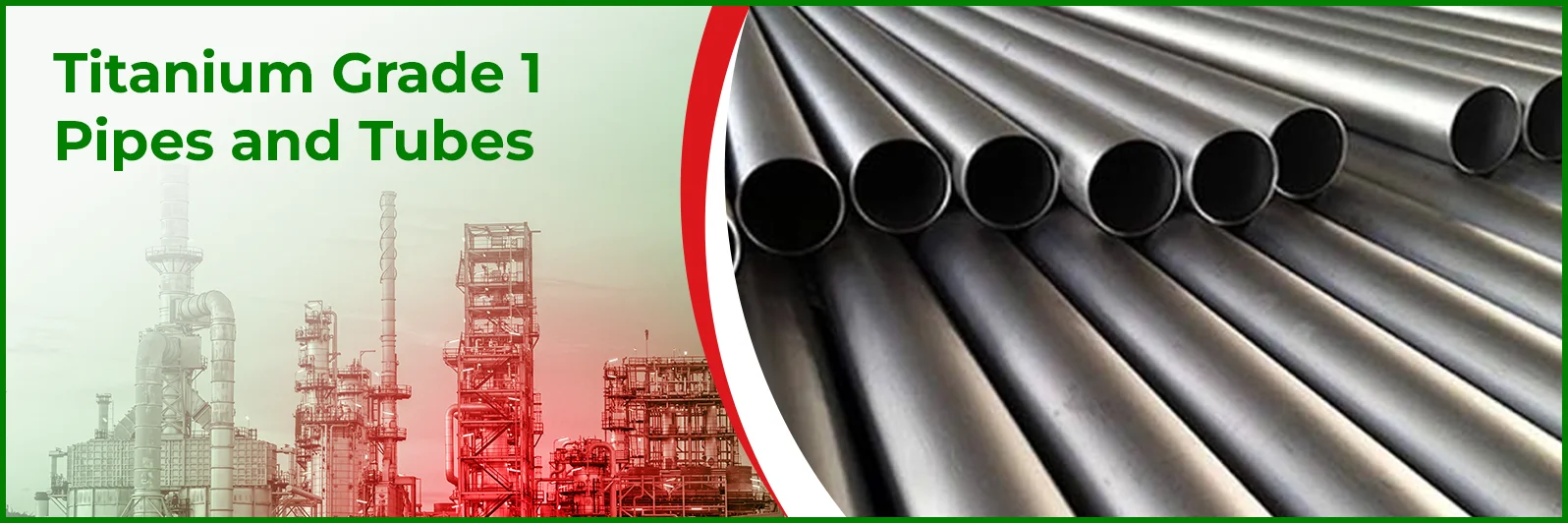
Rolling a titanium tube into a tube sheet works the metal hard, and the grade with the least oxygen takes that deformation most willingly, which is why Grade 1 appears where tube ends are heavily expanded or the part is deep formed. Oxygen controls ductility here. Pipes and tubes made of Titanium grade 1 are the most ductile among all commercially pure grades of titanium and have a minimum tensile strength of 240 MPa. They serve exchangers and chemical equipment at plants across Oman. Related grades are on the copper nickel and titanium pipes and tubes hub.
Where Titanium Grade 1 Is Used
- Heat exchanger and condenser tubes with heavily expanded ends
- Deep drawn and formed components
- Anodes and electrochemical equipment
- Chemical process equipment in chloride service
- Lining and cladding applications
For general service with more strength, titanium grade 2 is the usual choice; where pressure governs the wall, grade 3 goes further.
Oxygen, Strength and Formability
| Grade | Oxygen maximum | Minimum tensile strength | Character |
|---|---|---|---|
Grade 1 | 0.18% | 240 MPa | Softest and most formable commercially pure grade |
Grade 2 | 0.25% | 345 MPa | The general purpose workhorse |
Grade 3 | 0.35% | 450 MPa | Highest strength of the three unalloyed grades |
Oxygen acts as a strengthening element in titanium, so the three commercially pure grades differ mainly in how much of it they contain. More oxygen means more strength and less ductility. Grade 1 sits at the soft end, which suits tube ends that will be rolled hard into a tube sheet, or components that are formed in several operations.
Corrosion resistance is essentially the same across the commercially pure grades, so choosing between them is a mechanical decision rather than a corrosion one.
Grade 1 Corrosion Behaviour and Limits
Grade 1 resists seawater, chlorides and oxidising chloride solutions as well as any commercially pure titanium, and it is immune to the chloride stress corrosion cracking that limits austenitic stainless. Its weaknesses are the family's: reducing acids such as hydrofluoric and strong hydrochloric attack it, crevice corrosion becomes a risk in hot concentrated brine, and hydrogen pickup is possible in certain galvanic or reducing conditions. State your service conditions in the RFQ; requirements are confirmed at quotation.
Titanium Grade 1 Price Factors
Each enquiry is quoted individually, since alloy surcharges move week to week. What changes the figure:
- Grade and alloy content
- Product form, size and wall
- Finish, cleaning and passivation
- Supplementary tests and PMI
- Order quantity against mill minimums
- Stock or mill order
- Certificate level and inspection scope
- Delivery terms and destination port
Quotations are available in USD, OMR, AED, SAR, QAR, KWD and BHD, on EXW, FOB, CFR or CIF terms.
What to send for a quotation:
grade, standard, seamless or welded, NPS or OD, schedule or wall, length, quantity, finish, testing, certification, inspection, destination port and required date.
Certification, PMI and Inspection
Material comes with EN 10204 3.1 certificates as standard, and EN 10204 3.2 certificates on request. Inspection by the buyer's nominated third-party agency can be arranged; state your requirement in the RFQ. For Titanium Grade 1, review the chemistry, annealing details and mechanical results, and specify PMI so each item is verified before it goes into the line. See the MTC and EN 10204 certification guide.
Handling Titanium Grade 1 on Site
Lead time is confirmed at quotation. Pipe and tube arrive capped, and wrapped where the finish requires it. Store on timber or plastic, not on carbon steel, and use dedicated slings, brushes and grinding discs. Salt-laden coastal air leaves deposits on stored material, so a rinse before welding is worth the time.
Related Grades and Products
- Titanium grade 2 pipes and tubes
- Titanium grade 3 pipes and tubes
- Copper nickel 90/10 pipes and tubes
Grade 1 is used across desalination and water treatment and chemical plants.
Titanium Grade 1 FAQ
What is titanium Grade 1?
The softest commercially pure titanium grade, UNS R50250, with 240 MPa minimum tensile strength and the lowest oxygen content.
Why choose Grade 1 over Grade 2?
For formability. Lower oxygen means more ductility, which suits heavily expanded tube ends and deep formed parts.
Is Grade 1 less corrosion resistant than Grade 2?
No. Corrosion resistance is essentially the same across the commercially pure grades; the difference is mechanical.
Which standards apply?
ASTM B338 for tube, B861 for seamless pipe and B862 for welded pipe.
Can titanium be welded on site?
Yes, with inert gas shielding of the weld and the hot metal behind it, which needs trailing shields or purge arrangements.
What should I send for a quotation?
Send the grade, standard, form, OD, wall, length, quantity, forming requirements, certification and destination port.
Request a Quote for Titanium Grade 1 Pipes and Tubes
Send the grade, OD, wall, length and quantity, with the forming or expansion requirement. Every enquiry is checked before the offer is prepared, so the grade matches what the fabricator has to do with the tube.