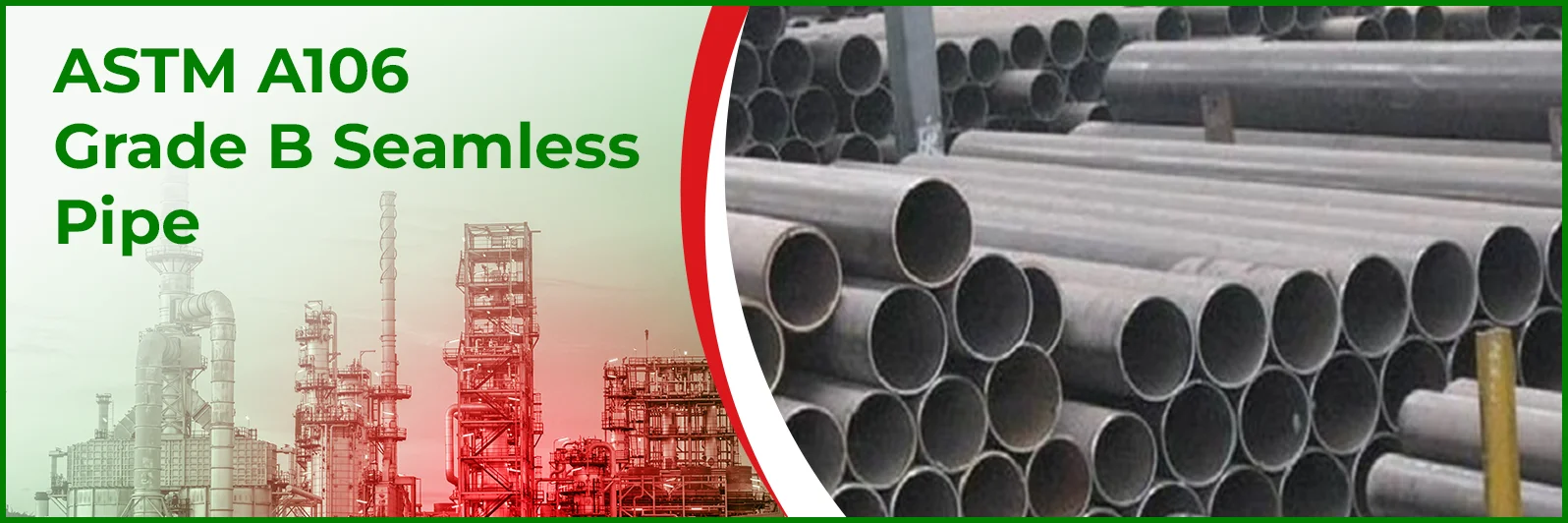
The ASTM A106 standard is designed for high-temperature use, and this is why it requires fully-killed steel with a minimum of 0.10% silicon. Deoxidation ensures that the pipe remains sound even when hot water and steam pipes are operating over long periods of time. Very few specifications omit this requirement. The ASTM A106 Grade B has a yield strength of 240 MPa and tensile strength of 415 MPa, and it readily bends, flanges or welds on the job. The ASTM Steel A106 Grade B is the standard carbon steel process pipe in any kind of industry all the way from refineries to power plants and processing plants in Oman. Related grades sit on the carbon steel seamless pipes and tubes hub.
A106 Grade B Applications in Gulf Plants
- Refining and petrochemicals: process, steam, condensate and hot oil lines
- Power and water: steam, feedwater and auxiliary piping in power and desalination plants
- Gas processing and LNG: hot process and utility lines (low-temperature lines use A333)
- Upstream facilities: plant piping at gathering stations and production facilities
- Fertilizer plants: steam and utility systems
Where metal temperature can drop below about -29 °C, including during blowdown, switch to ASTM A333 Grade 6. For general utility and structural pipe, ASTM A53 seamless pipe may be enough.
A106 Grade B in Sour Service
A106 Grade B can be used in sour service under NACE MR0175 / ISO 15156-2 when hardness is held to 22 HRC (250 HV) in the pipe, welds and heat-affected zones. Seamless construction avoids the question of seam hardness altogether, which makes A106 a common sour process pipe. Wet sour service may also call for HIC testing. State your sour service and testing requirements in the RFQ; they are confirmed at quotation. See the NACE MR0175 sour service guide.
What Affects the Price of A106 Grade B Pipe
- NPS, schedule and length
- Hot finished or cold drawn (small sizes are often cold drawn)
- Single, dual or triple certification
- Quantity and mill minimums
- Stock availability versus a mill order
- Supplementary tests: hardness, NDT, PMI or HIC
- Certification (EN 10204 3.1 or 3.2) and third-party inspection
- Incoterm and destination port
Quotations are available in USD, OMR, AED, SAR, QAR, KWD and BHD, on EXW, FOB, CFR or CIF terms.
What to send for a quotation: grade, NPS, schedule or wall, length, quantity, end finish, any dual certification, supplementary tests, certification, inspection, destination port and required date.
A106 Mill Certificates and Inspection
A106 Grade B pipe is supplied with EN 10204 3.1 mill test certificates as standard, and EN 10204 3.2 certificates on request. Inspection by the buyer's nominated third-party agency can be arranged; state your requirement in the RFQ. Check the certificate for silicon (0.10% minimum), the five-element residual total, tensile results and the hydrostatic or NDE test record. See the MTC and EN 10204 certification guide.
Packing A106 Pipe for Gulf Sites
Lead time is confirmed at quotation. Pipe ships with plastic end caps or bevel protectors, varnish on the outside surface where specified, and small sizes in strapped hexagonal bundles. Carbon steel rusts quickly on humid coastal yards, so store pipe on sleepers off the ground, keep caps on until fabrication, and protect bevels from blowing sand. UV-stable caps are worth specifying for long outdoor storage.
Fittings and Flanges for A106 Grade B
- Carbon steel buttweld fittings to ASTM A234 WPB
- Carbon steel forged fittings to ASTM A105 for socket weld and threaded work
- ASTM A105 carbon steel flanges and weld neck flanges
- Carbon steel fittings and flanges hub
A106 Grade B is used across refinery and petrochemical, power generation and oil and gas plants.
A106 Grade B Chemical Composition
|
Element |
Grade B (%) |
|---|---|
|
Carbon (C) |
0.30 max |
|
Manganese (Mn) |
0.29 to 1.06 |
|
Phosphorus (P) |
0.035 max |
|
Sulphur (S) |
0.035 max |
|
Silicon (Si) |
0.10 min |
|
Chromium (Cr) |
0.40 max |
|
Copper (Cu) |
0.40 max |
|
Molybdenum (Mo) |
0.15 max |
|
Nickel (Ni) |
0.40 max |
|
Vanadium (V) |
0.08 max |
The five residual elements (Cr, Cu, Mo, Ni and V) must not total more than 1.00%. The standard also allows manganese above 1.06% when carbon is reduced below its maximum, within a set limit.
Worked example: the residual element check
A certificate shows Cr 0.30%, Cu 0.35%, Mo 0.10%, Ni 0.30% and V 0.02%. Every element is individually within its limit. Add them together, though, and the total is 1.07%, which exceeds the 1.00% combined maximum. The heat does not conform to A106. This is one of the easiest checks to miss when reviewing mill certificates, and it matters most on pipe made from scrap-based steel, where residuals tend to run higher.
ASTM A106 Grade B FAQ
What is the difference between A106 Grade B and A53 Grade B?
Both have 240 MPa minimum yield and 415 MPa minimum tensile. A106 requires killed steel with at least 0.10% silicon, tighter phosphorus and sulphur limits, and is intended for high-temperature service. A53 has no silicon minimum and is aimed at general service.
Can A106 Grade B be used for low-temperature service?
Not where metal temperature can drop well below zero. A106 has no impact test requirement. Use ASTM A333 Grade 6, impact tested at -45 °C.
Is SA-106 the same as A106?
Yes. SA-106 is the ASME Boiler and Pressure Vessel Code adoption of ASTM A106, with the same requirements.
What is the residual element limit in A106?
Chromium, copper, molybdenum, nickel and vanadium must not total more than 1.00%, even when each is within its individual limit.
Is A106 Grade B suitable for sour service?
Yes, under NACE MR0175 / ISO 15156-2, when hardness is held to 22 HRC (250 HV) in the pipe and welds. State sour requirements in the RFQ.
What should I send for an A106 quotation?
Send the grade, NPS, schedule or wall, length, quantity, end finish, certification needs, supplementary tests, inspection, destination port and required date.
Request a Quote for ASTM A106 Grade B Seamless Pipe
Send the NPS, schedule, length and quantity, with your piping specification attached if you have one. Every enquiry is checked against ASTM A106 before the offer is prepared, so issues such as a low-temperature line listed in A106 are raised at the start.