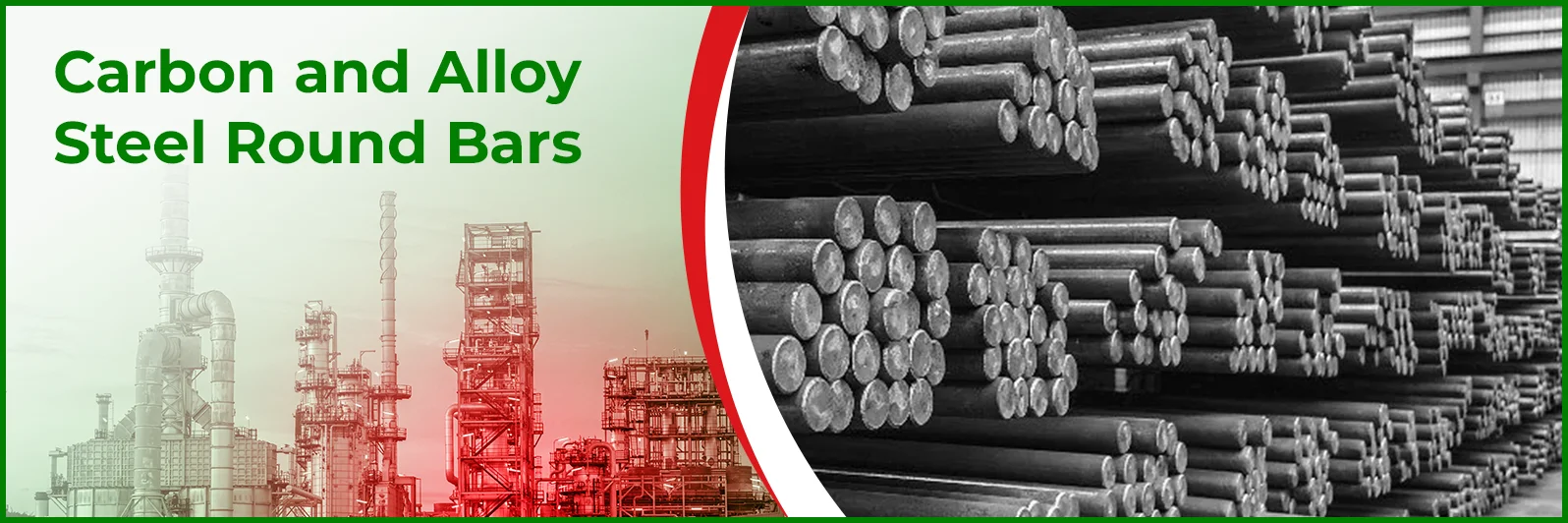
Order 4140 and you have specified a chemistry: roughly 0.40 percent carbon with chromium and molybdenum. You have not specified a strength. The same grade runs from annealed and soft enough to machine freely up to quenched and tempered at well over double that strength, and both bars carry the same marking, so on a shaft or a stud the condition is the requirement and the grade is only how it is reached. Carbon and alloy steel round bars serve machining, forging and fastener work across Oman and the GCC, and the condition belongs on every order. The range is on the round bars hub.
Condition Is the Specification
|
Condition |
What it gives |
Where it is used |
|---|---|---|
|
As rolled |
Mill condition, variable properties |
Structural and general purpose where properties are not critical |
|
Annealed |
Softest, best machinability |
Stock for machining where the part will be heat treated afterwards |
|
Normalised |
Refined, uniform grain |
General engineering, a predictable starting point |
|
Quenched and tempered |
Strength and toughness set by the tempering temperature |
Shafts, studs, gears, highly loaded parts |
On a quenched and tempered bar the tempering temperature is what decides the result, and it decides it across a wide range. Specify the condition and either the required mechanical properties or the hardness range, because a grade name alone leaves the requirement open.
A related point on section size. Hardenability is limited, so a large diameter bar quenched from the same temperature as a small one does not reach the same hardness at its centre. The properties quoted for a grade apply to a stated section, and on heavy bar the centre properties are lower than the surface. Where the core matters, state the diameter and ask for properties at the appropriate location.
Where Carbon and Alloy Bar Is Used
- Shafts, pins, gears and machined components across plant equipment
- Studs and bolting for flanged joints in oil and gas and refinery and petrochemical service
- Forging stock for fittings, flanges and valve bodies
- Structural and support components
- Pump and compressor parts
Matching products: carbon steel and alloy steel plates, carbon steel pipes and tubes and carbon steel fittings and flanges.
Sour Service
Under NACE MR0175 / ISO 15156 Part 2, carbon and low-alloy steel needs a hardness limit of 22 HRC with controlled chemistry and an accepted heat treatment condition, normally quenched and tempered for these grades. On bar this is the constraint that most often conflicts with the design, because the strength the component needs and the hardness the standard allows pull against each other.
Bolting is where it shows most clearly. B7M is the sour grade precisely because B7 can exceed the hardness limit, and the nut grade changes with it. Where a joint is in sour service, specify the bolting grade with the stud and nut designations together, and state the hardness requirement on the order rather than assuming the grade carries it.
What Moves the Price of Carbon and Alloy Steel Round Bars
- Material grade and alloy content, which carry market surcharges
- Type, size, pressure class and facing
- Matching pipe schedule or fitting wall
- Forged or wrought, and seamless or welded construction
- Testing: hardness, impact testing, NDT, PMI and ferrite checks where they apply
- Quantity against mill or forge minimums
- Certification level (EN 10204 3.1 or 3.2) and third-party inspection
- Incoterm and destination port
Quotations are available in USD, OMR, AED, SAR, QAR, KWD and BHD, on EXW, FOB, CFR or CIF terms.
What to send for a quotation:
item type, material grade and standard, size, pressure class, facing, schedule or wall, quantity, testing, certification, inspection, destination port and required date.
Carbon and Alloy Steel Round Bars: Certificates and Inspection
Supplied with EN 10204 3.1 certificates as standard, and EN 10204 3.2 certificates on request. Inspection by the buyer's nominated third-party agency can be arranged; state your requirement in the RFQ. The certificate should carry the material standard and grade, heat number, heat treatment condition and mechanical results, and the delivery condition with the quenching and tempering temperatures where they apply. PMI on receipt is worth specifying wherever grades share a store or a fabrication shop, since a stencil is only paint. See the MTC and EN 10204 certification guide.
Packing, Delivery and Gulf Site Storage
Lead time is confirmed at quotation. Items are packed in crates or bundles, with bevels and machined faces protected. On Gulf laydown yards the two things that cause rework are a damaged sealing face and surface contamination, so keep face protectors on until assembly and store alloy items clear of carbon steel racking, slings and grinding dust.
Related Products
- Round bars
- Stainless steel round bars
- Carbon steel and alloy steel plates
- Carbon steel fittings and flanges
- Carbon steel pipes and tubes
Carbon and Alloy Steel Round Bars FAQ
Does ordering 4140 specify a strength?
No. It specifies a chemistry. The same grade runs from annealed to quenched and tempered at more than double the strength, so the condition and the required properties or hardness belong on the order.
What do chromium and molybdenum do in 4140?
They raise hardenability rather than strength directly, so the bar transforms deeper into its section during quenching and the properties reach further towards the centre.
Why is 4340 used for heavy sections?
Its nickel content extends hardenability further than 4140, so a large diameter bar reaches useful properties nearer the core instead of leaving a soft centre.
Are EN19, 4140 and 42CrMo4 the same material?
They are the same broad material under three naming systems, with slightly different chemistry limits between the standards. Record the substitution rather than treating them as identical.
What is the difference between A193 B7 and B7M?
Strength and hardness. B7M is the sour service variant, hardness limited to meet NACE MR0175, and it pairs with A194 Grade 2HM nuts rather than 2H.
What should I send for a quotation?
Send the grade, diameter, condition, required properties or hardness, tolerance, length, quantity, testing, certification and destination port.
Request a Quote for Carbon and Alloy Steel Round Bars
Send the grade with the condition and either the required properties or the hardness range, plus the diameter. Where a heavy bar is specified and the core properties matter, the section size question is raised before the heat treatment is set.