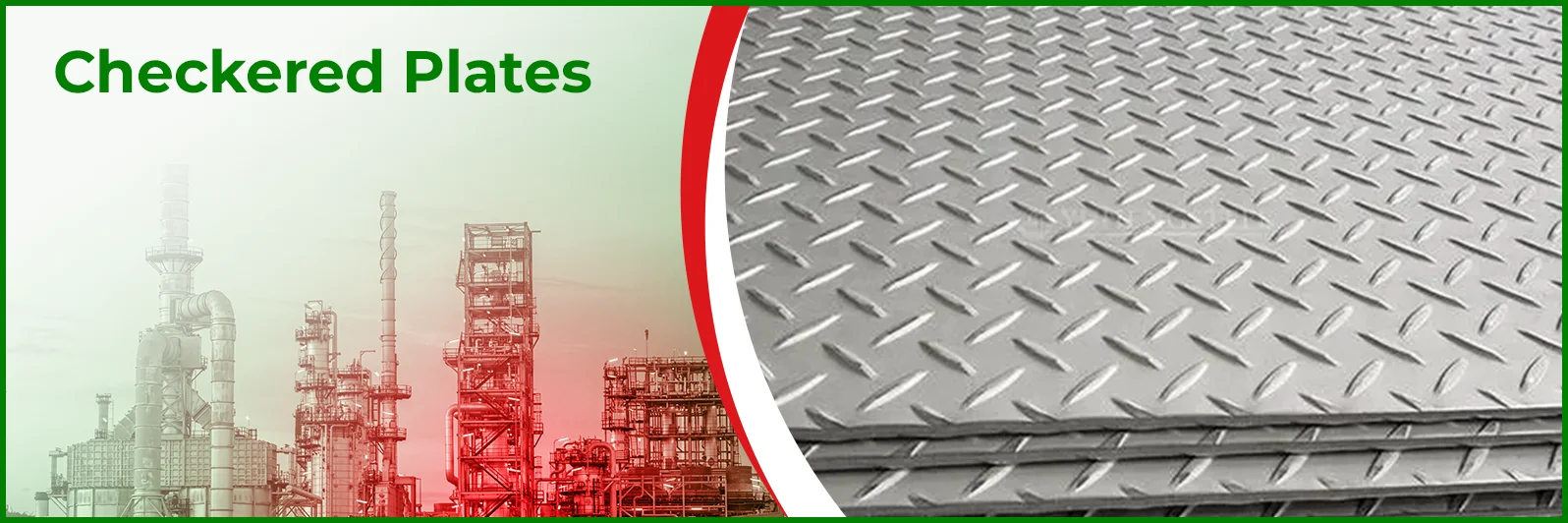
A checkered sheet is characterized by its base thickness. The raised pattern rests on top of that. When an order is placed for a 5 mm sheet, the metal under the pattern is actually 5 mm thick, and the lugs add on to this height. A particular drawing where the entire sheet is considered only as the thickness has a mistake about both the weight as well as the clearance. On a platform of any size that error compounds through the structural calculation. Checkered plates go into walkways, platforms and flooring across Oman and the GCC. The range is on the plates and sheets hub.
Base Thickness, Pattern Height and Weight
|
Term |
What it means |
|---|---|
|
Base thickness |
The thickness of the plate beneath the pattern. This is what is ordered and what the structural calculation uses |
|
Pattern height |
The height of the raised lugs above the base, additional to the base thickness |
|
Overall thickness |
Base plus pattern height. Used for clearance and stacking, not for strength |
|
Weight |
Base plate weight plus the weight of the pattern, so a checkered plate is heavier than a plain plate of the same stated thickness |
Three places this catches people:
- Structural calculations. Section properties come from the base thickness. The pattern adds weight without adding useful strength.
- Clearance at edges and door thresholds. The overall thickness is what has to fit, including where a plate meets a frame or a cover.
- Weight on the structure and on the crane. The pattern adds material, so a checkered plate weighs more per square metre than the plain plate it is priced against.
Give the base thickness on every enquiry and say so explicitly, because an order that simply states a thickness is ambiguous and the two readings differ by the pattern height.
Fabrication and Site Points
Cutting. Plasma, laser, waterjet and sawing all work. The pattern makes clamping less certain, so cutting tolerances are usually looser than on plain plate.
Slip resistance. The pattern provides it, and it reduces as the lugs wear. On heavily trafficked walkways the plate is a wearing item, and a replacement interval belongs in the maintenance plan rather than being discovered when someone slips.
Storage. Stacked checkered plate does not sit flat on itself, so stacks are less stable than plain plate and water sits in the pattern. Store on dunnage with a fall and avoid long term flat stacking outdoors in Gulf conditions.
What Moves the Price of Checkered Plates
- Material grade and alloy content, which carry market surcharges
- Type, size, pressure class and facing
- Matching pipe schedule or fitting wall
- Forged or wrought, and seamless or welded construction
- Testing: hardness, impact testing, NDT, PMI and ferrite checks where they apply
- Quantity against mill or forge minimums
- Certification level (EN 10204 3.1 or 3.2) and third-party inspection
- Incoterm and destination port
Quotations are available in USD, OMR, AED, SAR, QAR, KWD and BHD, on EXW, FOB, CFR or CIF terms.
What to send for a quotation:
item type, material grade and standard, size, pressure class, facing, schedule or wall, quantity, testing, certification, inspection, destination port and required date.
Checkered Plates: Certificates and Inspection
Supplied with EN 10204 3.1 certificates as standard, and EN 10204 3.2 certificates on request. Inspection by the buyer's nominated third-party agency can be arranged; state your requirement in the RFQ. The certificate should carry the material standard and grade, heat number, heat treatment condition and mechanical results, and the base thickness distinguished from the overall thickness. PMI on receipt is worth specifying wherever grades share a store or a fabrication shop, since a stencil is only paint. See the MTC and EN 10204 certification guide.
Packing, Delivery and Gulf Site Storage
Lead time is confirmed at quotation. Items are packed in crates or bundles, with bevels and machined faces protected. On Gulf laydown yards the two things that cause rework are a damaged sealing face and surface contamination, so keep face protectors on until assembly and store alloy items clear of carbon steel racking, slings and grinding dust.
Related Plate Products
- Carbon steel and alloy steel plates
- Stainless steel plates and sheets
- Corten steel plates
- Plates and sheets
Checkered Plates FAQ
Is the stated thickness the base or the overall thickness?
The base. The raised pattern sits above it, so overall thickness is base plus pattern height. Structural calculations use the base; clearances use the overall figure.
Does the pattern add strength?
No. It adds weight and slip resistance. Section properties come from the base thickness alone, so a checkered plate is heavier than a plain plate of the same stated thickness without being stronger.
Does pattern orientation matter?
On directional patterns such as tear drop, yes. Grip is better across the lugs than along them, so state the orientation relative to the direction of travel where it matters.
Which standard covers checkered floor plate?
ASTM A786 for hot rolled carbon, low alloy and high strength low alloy floor plates. Stainless floor plate is supplied against the stainless plate specifications with the pattern added.
Can checkered plate be galvanized?
Yes, and it usually is on carbon steel in this region. The coating thickness varies across the pattern, with more zinc on the lugs and less in the recesses, so visual uniformity is imperfect.
What should I send for a quotation?
Send the material grade, base thickness, pattern type, width and length or cut size, finish or coating, quantity, certification and destination port.
Request a Quote for Checkered Plates
Send the base thickness, pattern and size, and say explicitly that the thickness is the base figure. Enquiries where the thickness could be read either way are queried, because the two readings differ by the pattern height on every plate in the order.