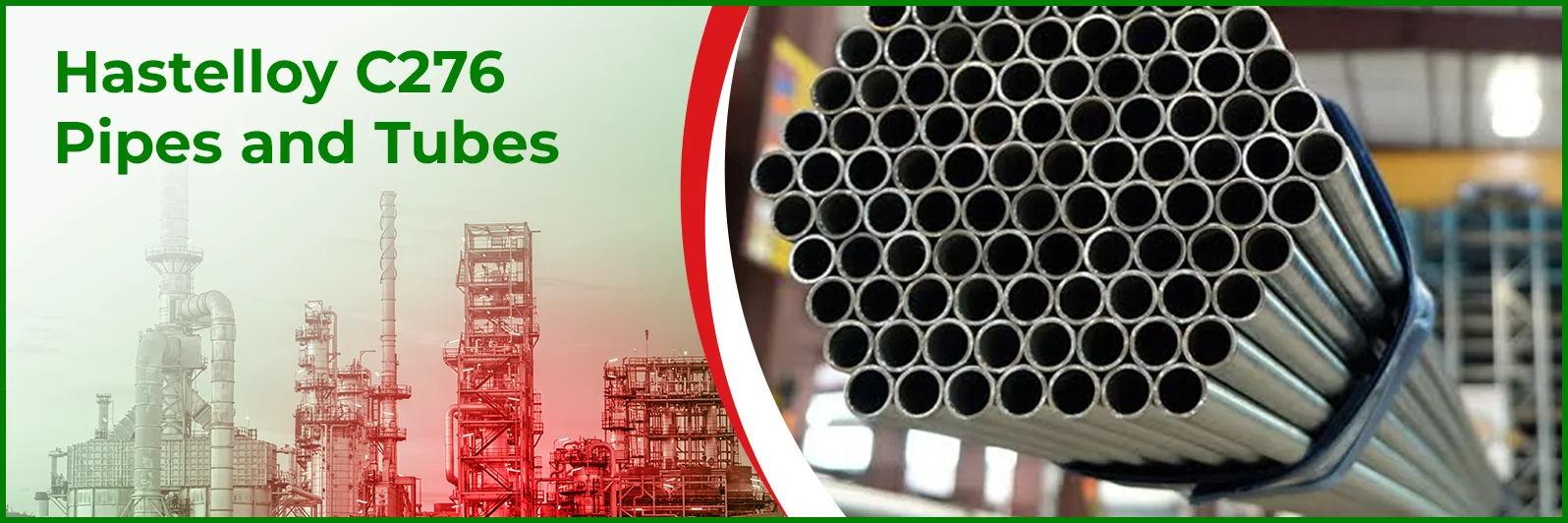
C276 was the alloy that made welded fabrication practical in severe acid service, because its carbon and silicon are held so low that the weld zone keeps its corrosion resistance without a post-weld solution anneal. That one property changed how chemical plants are built. Hastelloy C276 pipes and tubes carry roughly 16% molybdenum with chromium and tungsten, annealed to ASTM B622 or B619. Molybdenum and tungsten carry the corrosion resistance. They serve scrubbers, acid plants and chemical process lines at facilities across Oman. Other alloys are on the nickel and exotic alloy pipes and tubes hub.
Where Hastelloy C276 Is Used
- Flue gas desulphurisation and scrubber systems
- Sulphuric, hydrochloric and mixed acid process lines
- Wet chlorine and chlorinated organic service
- Pulp bleaching and chemical process equipment
- Sour service where chlorides and H2S are both severe
Where the service swings between oxidising and reducing, Hastelloy C22 is often preferred; for hydrochloric acid without oxidisers, Hastelloy B3 goes further.
Why Low Carbon and Silicon Matter
Feature | Effect |
|---|---|
Carbon held to 0.010% maximum | Limits carbide precipitation at grain boundaries during welding |
Silicon held low | Reduces the tendency to form damaging intermetallic phases in the heat-affected zone |
Result | The weld zone keeps its corrosion resistance without a post-weld solution anneal |
Tungsten addition | Improves resistance to localised corrosion alongside molybdenum |
Molybdenum, 15 to 17% | Carries resistance to reducing acids and to pitting and crevice attack |
The earlier generation of these alloys needed solution annealing after welding, which is impractical on site fabrication. C276 removed that constraint, which is why it became the standard choice for welded equipment in severe chemical service. Heat input and interpass temperature still need control, and heat tint should be removed, but the base requirement of annealing every weld is gone.
Corrosion Range and Sour Service
C276 resists an unusually wide range of media, including reducing acids, wet chlorine, hypochlorite and chloride-rich conditions, and it resists pitting, crevice corrosion and chloride stress corrosion cracking. In strongly oxidising conditions the higher-chromium C22 performs better, and in hot concentrated hydrochloric acid without oxidisers the B-type alloys do. Under NACE MR0175 / ISO 15156-3, it is accepted for severe sour service within alloy-specific conditions. State your service conditions in the RFQ; requirements are confirmed at quotation.
Pricing Hastelloy C276 Pipe and Tube
- Raw material surcharges for the alloying elements in this grade
- Seamless or welded construction
- Diameter, wall thickness and cut lengths
- Very high molybdenum and nickel content, which place C276 among the most expensive alloys supplied as pipe
- Required finish and cleanliness
- Testing, certification level and witness requirements
- Quantity and availability
- Incoterm and port of discharge
Quotations are available in USD, OMR, AED, SAR, QAR, KWD and BHD, on EXW, FOB, CFR or CIF terms.
What to send for a quotation:
grade, standard, seamless or welded, NPS or OD, schedule or wall, length, quantity, finish, testing, certification, inspection, destination port and required date.
Mill Certificates and Verification
Hastelloy C276 is supplied with EN 10204 3.1 certificates as standard, and EN 10204 3.2 certificates on request. Inspection by the buyer's nominated third-party agency can be arranged; state your requirement in the RFQ. The certificate should record chemistry, heat treatment, tensile properties and any additional testing ordered. Positive material identification is worth specifying wherever several stainless grades share a fabrication shop. See the MTC and EN 10204 certification guide.
Storage and Contamination Control
Lead time is confirmed at quotation. Material is capped and, where specified, wrapped to protect the surface. Iron contamination is the main storage risk: carbon steel tools, slings and airborne grinding dust all leave particles that rust and can trigger pitting, so segregation on the Gulf laydown yard matters as much as the original grade choice.
Fittings and Related Alloys
Match with ASTM B366 fittings and B564 flanges in the same alloy.
C276 is used across refinery and petrochemical, fertilizer and chemical plants.
Hastelloy C276 FAQ
What is Hastelloy C276?
A nickel-molybdenum-chromium alloy with tungsten, UNS N10276, used for severe acid, chloride and wet chlorine service.
Why can C276 be welded without solution annealing?
Its carbon and silicon are held very low, so the weld zone does not lose corrosion resistance the way earlier alloys did.
How does C276 compare with C22?
C22 has more chromium and does better in oxidising conditions; C276 has more molybdenum and tungsten and does better in some reducing media.
Is C276 accepted for sour service?
Yes, within the alloy-specific conditions of ISO 15156-3, and it is one of the alloys used for the most severe sour environments.
What is the EN equivalent?
2.4819 (NiMo16Cr15W).
What should I send for a quotation?
Send the UNS number, standard, form, size, wall, length, quantity, service conditions, testing, certification and destination port.
Request a Quote for Hastelloy C276 Pipes and Tubes
Send the UNS number, size, wall and quantity, with the fluid composition and temperature. Every enquiry is checked before the offer is prepared, so the choice between C276, C22 and the B-type alloys is made on the actual chemistry.