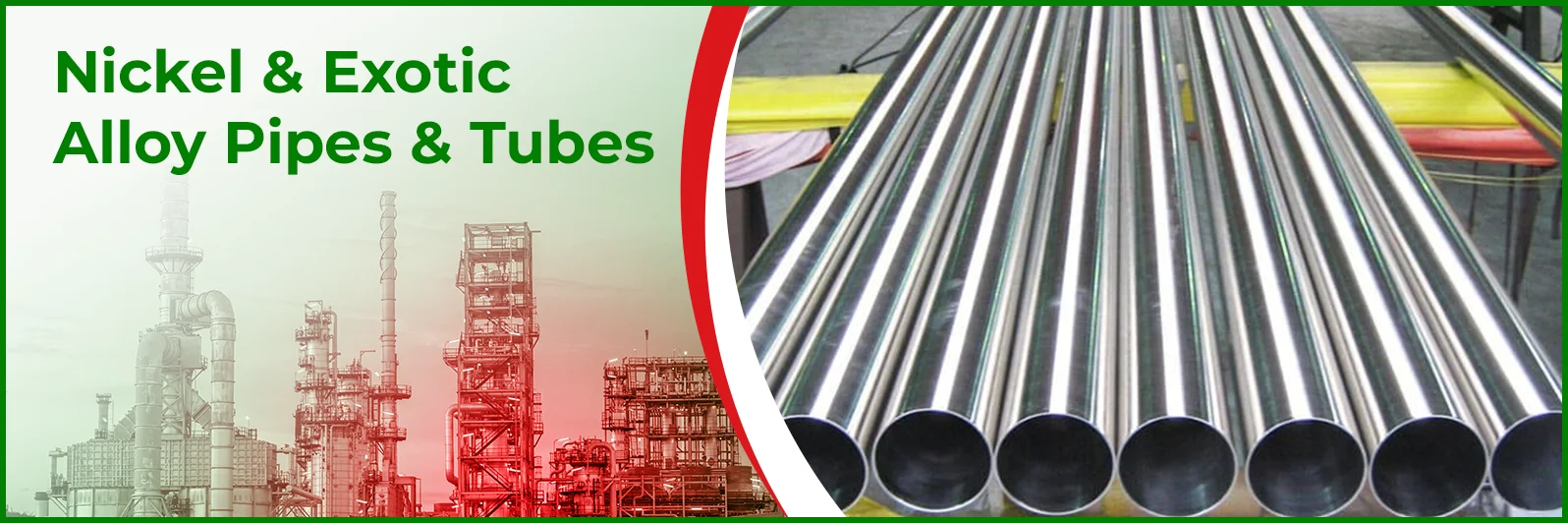
Nickel alloys are rarely chosen because a designer wants them; they appear when stainless has already been ruled out by acid, by chlorides at temperature, or by sour conditions beyond what duplex will take. The question then is which alloy solves that specific problem, since none of them is good at everything. Our nickel and exotic alloy pipes and tubes cover the common corrosion and heat resistant grades, from alloy 600 and 625 to Hastelloy and Monel. CRA clad and lined pipe covers long pipelines where solid alloy is unaffordable. Both serve plants across Oman. Other material families are on the pipes and tubes hub.
Choosing an Alloy by the Problem
Problem | Usual alloys | Page |
|---|---|---|
Sour wells, CO2 and chlorides in oil and gas | Alloy 825, alloy 625 | |
Reducing acids, mixed acids, severe process corrosion | Hastelloy C276, C22, B3, Alloy 20 | |
Caustic, chloride cracking, heat treatment equipment | Alloy 600, Nickel 200/201 | |
High-temperature oxidation and creep | Alloy 601, 617, 800H/800HT | |
Seawater, hydrofluoric acid service | Monel 400 | |
High strength with corrosion resistance | Alloy 718 | |
Steam generator and nuclear-grade service | Alloy 690 | |
Corrosive fluid in a long pipeline, where solid alloy is unaffordable | CRA clad or lined carbon steel |
Trade names such as Inconel, Incoloy, Monel and Hastelloy are widely used in the market and are registered to their owners. The UNS numbers are what belong on enquiries, certificates and material records.
Sour Service and PMI
Under NACE MR0175 / ISO 15156-3, each nickel alloy family has its own acceptance conditions, often with limits on cold work and hardness as well as environment. Alloy 825 and alloy 625 are the common choices for sour oil and gas service, with higher alloys where conditions are more severe.
Because nickel alloys look alike and cost many times what stainless does, positive material identification on receipt is standard practice, and the PMI method must be capable of distinguishing the specific alloy rather than simply confirming high nickel.
Price and Lead Time
- Alloy content, particularly nickel, molybdenum, cobalt and tungsten
- Pipe or tube, size, wall and length
- Seamless or welded
- Mill campaign timing, since many alloys are made to order
- Testing: corrosion testing, PMI, impact testing and NDT
- Certification (EN 10204 3.1 or 3.2) and third-party inspection
- Incoterm and destination port
Quotations are available in USD, OMR, AED, SAR, QAR, KWD and BHD, on EXW, FOB, CFR or CIF terms.
What to send for a quotation:
alloy and UNS number, standard, form, size, wall, length, quantity, service conditions, testing, certification, inspection, destination port and required date.
Certificates and Inspection
Nickel alloy pipe and tube are supplied with EN 10204 3.1 certificates as standard, and EN 10204 3.2 certificates on request. Inspection by the buyer's nominated third-party agency can be arranged; state your requirement in the RFQ. Certificates should show the full alloy analysis, heat treatment condition, mechanical results and any corrosion testing. See the MTC and EN 10204 certification guide.
Handling and Storage
Lead time is confirmed at quotation. Nickel alloys ship capped and wrapped. Keep them away from carbon steel entirely, since iron contamination is both a corrosion risk and a source of confusion in PMI checks, and store high-value material under cover with clear grade marking.
Fittings and Related Products
- Nickel alloy fittings and flanges
- CRA clad and lined pipes
- Duplex and super duplex pipes and tubes, often the step before a nickel alloy
Nickel alloys are used across refinery and petrochemical, fertilizer, upstream oil and gas and sour service and power generation plants.
Nickel Alloy FAQ
When is a nickel alloy needed instead of stainless or duplex?
When acid, chlorides at temperature, or sour conditions exceed what stainless and duplex will tolerate. The alloy is then chosen for the specific corrodent.
Which alloys are common in sour oil and gas service?
Alloy 825 and alloy 625, within the limits of ISO 15156-3.
Are Inconel and Hastelloy generic names?
No. They are registered trade names in common use. Enquiries and certificates should carry the UNS number.
Why is PMI so important for nickel alloys?
The alloys look alike, cost many times more than stainless, and substituting one for another can fail quickly in service.
What is clad or lined pipe?
Carbon steel pipe with a corrosion-resistant alloy layer on the bore, used where a solid alloy line would be unaffordable.
What should I send for a quotation?
Send the alloy and UNS number, standard, form, size, wall, length, quantity, service conditions, testing and delivery details.
Request a Quote for Nickel and Exotic Alloy Pipes and Tubes
Send the UNS number, size and quantity, with the fluid, temperature and pressure conditions. Every enquiry is checked before the offer is prepared, so the alloy is matched to the corrodent rather than to habit, and lead time is confirmed early.