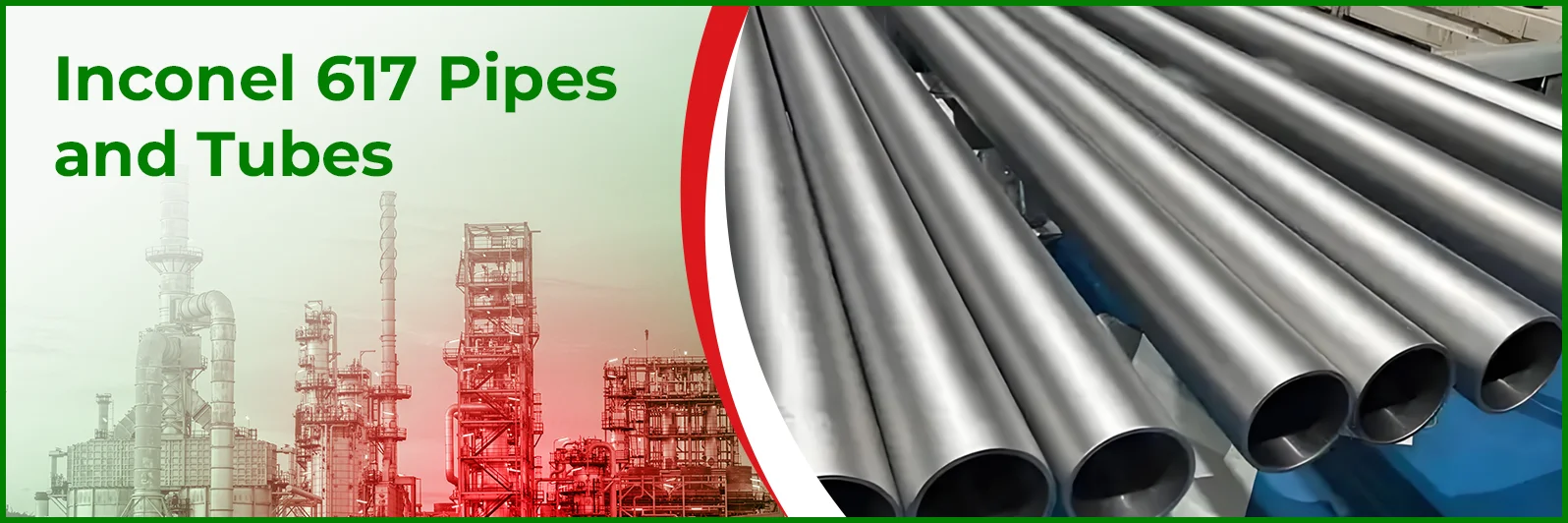
Alloy substitutes for nickel do not exclusively provide specific load bearing qualities, while at the time of combustion significance shifts from corrosion to that of creep failure. In the case of Inconel 617, it is provided with an alloy of cobalt and molybdenum in solid solution giving it a high creep strength even before other alloys such as 600 and 601 start to stretch. Inconel 617 is prepared from a fusion of nickel and chromium with cobalt and molybdenum, and it is provided by the manufacturer in the form of seamless pipes and tubes. It is specified for gas turbine hardware, combustion components and high-temperature ducting at plants across Oman. Other alloys are on the nickel and exotic alloy pipes and tubes hub.
Where Inconel 617 Is Used
- Gas turbine combustion components and transition ducts
- High-temperature ducting and expansion joints
- Furnace internals and radiant components under load
- Petrochemical reformer and cracking furnace hardware
- Applications where 601 lacks creep strength at temperature
For furnace service without heavy load, Inconel 600 and 601 is more economical; for severe corrosion rather than heat, Inconel 625 or Hastelloy C276 are the usual choices.
What Cobalt and Molybdenum Add
Element | Role in Inconel 617 |
|---|---|
Nickel, 44.5% minimum | Base for oxidation resistance and structural stability |
Chromium, 20 to 24% | Oxidation and hot corrosion resistance |
Cobalt, 10 to 15% | Solid solution strengthening at high temperature |
Molybdenum, 8 to 10% | Further solid solution strengthening |
Aluminium, 0.8 to 1.5% | Contributes to oxide stability and some precipitation strengthening |
The result is an alloy that keeps useful strength at temperatures where most stainless steels and the simpler nickel alloys have little left. Two practical points follow. Cobalt content matters where nuclear or specific industry rules limit it, so check the specification before ordering. And fabrication needs care: welding procedures, heat input and post-weld condition all affect high-temperature performance, so the fabricator's experience with the alloy is worth confirming alongside the material.
Service Conditions and Limits
Inconel 617 is chosen for strength and oxidation resistance at high temperature rather than for aqueous corrosion. In strongly sulphidising atmospheres, high-nickel alloys can suffer, and grade selection should consider the gas composition and not just the temperature. Long exposure at intermediate temperatures can also affect toughness. Under NACE MR0175 / ISO 15156-3, nickel alloys have alloy-specific acceptance limits. State your operating temperature, atmosphere and any code requirements in the RFQ; requirements are confirmed at quotation.
Inconel 617 Price Factors
Each enquiry is quoted individually, since alloy surcharges move week to week. What changes the figure:
- Grade and alloy content
- Product form, size and wall
- Finish, cleaning and passivation
- Cobalt and molybdenum content, which put this alloy among the more expensive nickel grades
- Supplementary tests and PMI
- Order quantity against mill minimums
- Stock or mill order
- Certificate level and inspection scope
- Delivery terms and destination port
Quotations are available in USD, OMR, AED, SAR, QAR, KWD and BHD, on EXW, FOB, CFR or CIF terms.
What to send for a quotation:
grade, standard, seamless or welded, NPS or OD, schedule or wall, length, quantity, finish, testing, certification, inspection, destination port and required date.
Certification, PMI and Inspection
Material comes with EN 10204 3.1 certificates as standard, and EN 10204 3.2 certificates on request. Inspection by the buyer's nominated third-party agency can be arranged; state your requirement in the RFQ. For Inconel 617, review the chemistry, annealing details and mechanical results, and specify PMI so each item is verified before it goes into the line. See the MTC and EN 10204 certification guide.
Handling Inconel 617 on Site
Lead time is confirmed at quotation. Pipe and tube arrive capped, and wrapped where the finish requires it. Store on timber or plastic, not on carbon steel, and use dedicated slings, brushes and grinding discs. Salt-laden coastal air leaves deposits on stored material, so a rinse before welding is worth the time.
Fittings and Related Alloys
Match with ASTM B366 fittings and B564 flanges in the same alloy.
- nickel alloy fittings and flanges
- Inconel 600 and 601 pipes and tubes
- Incoloy 800/800H/800HT pipes and tubes
Inconel 617 is used across power generation and refinery and petrochemical plants.
Inconel 617 FAQ
What is Inconel 617?
A nickel-chromium-cobalt-molybdenum alloy, UNS N06617, developed for strength and oxidation resistance at very high temperature.
Why does it contain cobalt?
Cobalt provides solid solution strengthening that helps the alloy resist creep at high temperature.
Where is 617 used?
Gas turbine combustion hardware, high-temperature ducting, furnace internals and petrochemical furnace components.
How does 617 compare with 601?
601 resists oxidation well but has less strength at temperature. 617 is chosen where the component carries load while hot.
Does cobalt content cause restrictions?
In some industries and in nuclear work, cobalt is restricted. Check the specification before ordering.
What should I send for a quotation?
Send the UNS number, standard, form, size, wall, length, quantity, operating temperature, testing, certification and destination port.
Request a Quote for Inconel 617 Pipes and Tubes
Send the UNS number, size, wall and quantity, with the operating temperature and any code requirements. Every enquiry is checked before the offer is prepared, so cobalt restrictions and fabrication requirements are identified at the start.