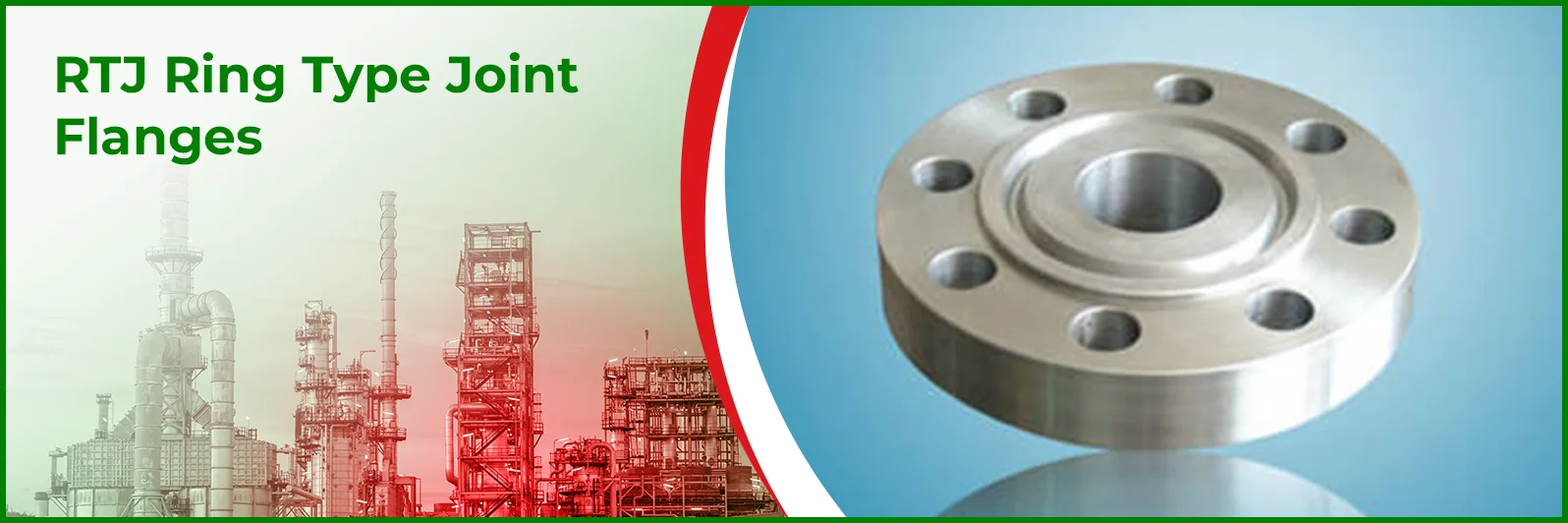
A ring joint seals because the soft metal ring deforms into the machined groove and the groove does not deform back. That only holds while the ring is the softer of the two. Fit a ring harder than the flange, as happens when a stainless ring goes into a carbon steel groove without anyone checking, and the groove takes the damage instead, permanently, on a component that costs many times the gasket. RTJ flanges go onto pipeline and high pressure service across Oman and the GCC. The wider range is on the pipe fittings and flanges hub.
Ring and Groove as a Pair
The ring is a consumable and the flange is not, so the hardness relationship has to run one way. Standard practice is that the ring gasket is specified softer than the flange material it seats against, and the ring material is chosen with that in mind rather than simply matching the pipe.
| Ring material | Commonly used against |
|---|---|
Soft iron | Carbon steel flanges in lower pressure service |
Low carbon steel | Carbon steel and low alloy flanges |
Type 304 and 316 stainless | Stainless flanges, and carbon steel flanges where corrosion requires it, subject to the hardness check |
Monel, Inconel and other nickel alloys | Matching nickel alloy flanges and corrosive service |
Duplex | Duplex and super duplex flanges |
Two practical rules:
- Check the hardness relationship, not only the material name. A 316 ring against a hardened or high yield carbon steel flange may not be softer, and the certificate hardness is what settles it.
- Replace the ring every time the joint is broken. A ring that has already deformed into one groove will not seal the same way twice, and reusing it is a common cause of a leak on restart.
Inspect the groove whenever a joint is opened. A scored or dented groove is a repair job, and on a pipeline flange that usually means re-machining in place or cutting the flange out.
Ring Types
| Type | Profile | Where it is used |
|---|---|---|
R, oval | Rounded section, seats in a round bottomed groove | Older installations, and flat bottomed grooves where the standard permits it |
R, octagonal | Flat sided section, seats in a flat bottomed groove | The general choice today, better seating contact than oval |
RX | Pressure energised, seats against the outer groove wall | API 6B flanges, pipeline and wellhead service, line pressure helps the seal |
BX | Pressure energised, flange faces make contact when made up | API 6BX, very high pressure service |
R oval and R octagonal are interchangeable in a flat bottomed groove, but an oval ring is required where the groove is round bottomed. RX and BX are not interchangeable with R, and BX flanges are a different design in which the faces meet, so a BX ring cannot be fitted to an R groove or the reverse.
Ring gaskets and their dimensions follow ASME B16.20; the grooves in the flanges follow ASME B16.5 and B16.47.
Where RTJ Is Specified
- Pipeline and gas transmission service, where a metal seal resists blowout better than a sheet gasket
- High pressure process piping, typically Class 600 and above
- Wellhead and tie-in piping, usually to API 6A rather than ASME dimensions
- High temperature service where sheet gaskets relax
- Oil and gas and refinery and petrochemical units with hydrogen or high pressure duty
A ring joint also tolerates thermal cycling better than many sheet gaskets, because the ring stays elastic in its groove. What it does not tolerate is misalignment during make-up, since the ring has to seat evenly to deform evenly.
Grades Supplied
| Material family | Standard | Common grades |
|---|---|---|
Carbon steel | ASTM A105, A350 | A105, A105N, LF2 |
High yield pipeline | ASTM A694 | F52, F60, F65, F70 |
Alloy steel | ASTM A182 | F11, F22, F91 |
Stainless steel | ASTM A182 | F304L, F316L, F321, F347 |
Duplex and super duplex | ASTM A182 | F51, F60, F53, F55 |
Nickel alloys | ASTM B564 | Inconel, Monel and Hastelloy grades |
Sour Service
Under NACE MR0175 / ISO 15156, the flange and the ring are both part of the pressure boundary and both are covered. Carbon and low-alloy steel needs a hardness limit of 22 HRC with an accepted heat treatment condition; stainless, duplex and nickel alloy rings and flanges fall under Part 3 with environmental limits by alloy. The ring is the part most often overlooked, because it is bought as a gasket rather than as a pressure component. State the sour requirement for both on the order.
RTJ Ring Type Joint Flanges: Price Factors
Each enquiry is priced on its own, because grade, class and testing scope move the figure more than quantity does. What counts:
- Grade and the alloying elements it carries
- Size, pressure class, facing and bore
- Schedule or wall the item is made to
- Production route, forged or formed from pipe or plate
- Supplementary testing and inspection scope
- Order quantity and availability
- Certificate level and witness requirements
- Delivery terms and port of discharge
Quotations are available in USD, OMR, AED, SAR, QAR, KWD and BHD, on EXW, FOB, CFR or CIF terms.
What to send for a quotation:
item type, material grade and standard, size, pressure class, facing, schedule or wall, quantity, testing, certification, inspection, destination port and required date.
Certification, Traceability and PMI
Material comes with EN 10204 3.1 certificates as standard, and EN 10204 3.2 certificates on request. Inspection by the buyer's nominated third-party agency can be arranged; state your requirement in the RFQ. Check that the heat number on the certificate matches the marking on the item itself, and that the heat treatment condition is stated, and the ring gasket material and hardness where rings are supplied with the flanges. Positive material identification confirms the grade before anything is welded in. See the MTC and EN 10204 certification guide.
Delivery and Handling
Lead time is confirmed at quotation. Fittings ship bundled or crated with bevel protection; flanges ship with face and ring groove protection, since a scored face leaks whatever the gasket. In coastal Oman, salt deposits build up on anything left in the open, so a rinse and a dry before fitting up is worth the time.
Related Flanges
- Specialty flanges
- Weld neck flanges
- Blind flanges
- Large diameter flanges to ASME B16.47
- High yield pipeline fittings and flanges
RTJ Ring Type Joint Flanges FAQ
Should the ring be harder or softer than the flange?
Softer. The ring deforms into the groove to seal, and if it is the harder of the two the groove takes the damage instead, permanently.
Can a ring gasket be reused?
No. A ring that has deformed into one groove will not seal the same way again, so it is replaced every time the joint is broken.
What is the difference between oval and octagonal rings?
Octagonal rings have flat sides and seat in flat bottomed grooves with better contact. Oval rings are required where the groove is round bottomed, and are interchangeable with octagonal only in flat bottomed grooves.
What are RX and BX rings?
Pressure energised types. RX seats against the outer groove wall so line pressure assists the seal; BX is for very high pressure service where the flange faces make contact on make-up. Neither interchanges with R.
Does the groove surface finish matter?
Yes. Too rough and it will not seal; polished smoother than the standard is not an improvement, because the ring needs to bite into the surface.
What should I send for a quotation?
Send the NPS, pressure class, ring type and number, flange grade, whether rings are in scope, sour requirements, certification, inspection and destination port.
Request a Quote for RTJ Ring Type Joint Flanges
Send the size, class, ring type and flange grade, and say whether the rings themselves are in scope. Where the ring material would not be softer than the groove it seats in, that is raised before the offer rather than after a groove is damaged.