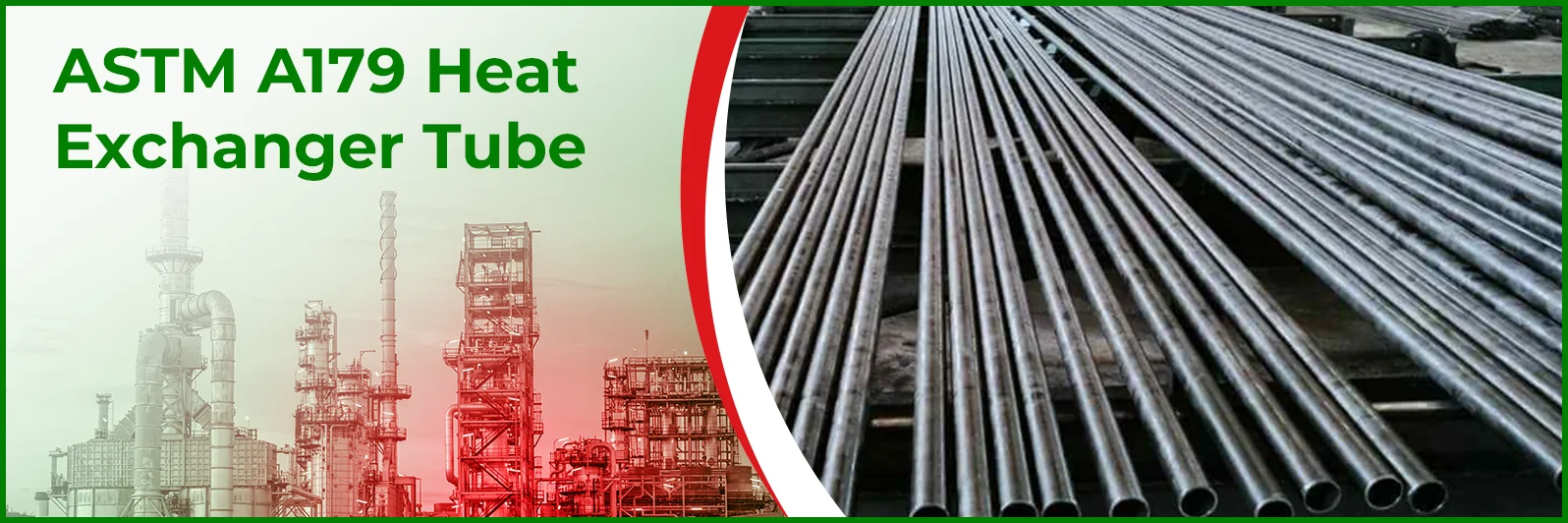
In a shell and tube exchanger, a single leaking tube joint among several hundred can take the whole unit offline, so A179 tubes are made to close cold drawn tolerances with a 72 HRB hardness limit to make every tube-to-tubesheet joint roll the same way. Consistency is what buyers pay for. ASTM A179 heat exchanger tubes are low-carbon seamless tubes, cold drawn and heat treated, from 3.2 mm to 76.2 mm OD. They are the most widely specified carbon steel tubes for exchangers, condensers and coolers in refineries, gas plants and power stations across Oman. Boiler tube grades sit on the carbon steel seamless pipes and tubes hub.
Where A179 Tubes Are Used
- Shell and tube heat exchangers in refining, petrochemical and gas processing units
- Surface condensers and coolers where the cooling medium suits carbon steel
- Feedwater heaters in power plants
- Air coolers and lube oil coolers on compressors and turbines
- Reboilers and preheaters
For seawater or corrosive cooling media, carbon steel is usually not suitable. Copper nickel and titanium tubes or stainless steel tubes are the usual alternatives. The welded equivalent of A179 is ASTM A214.
A179 Chemical Composition
|
Element |
A179 (%) |
|---|---|
|
Carbon (C) |
0.06 to 0.18 |
|
Manganese (Mn) |
0.27 to 0.63 |
|
Phosphorus (P) |
0.035 max |
|
Sulphur (S) |
0.035 max |
Low carbon keeps the tube soft and ductile for expansion.
A179 Tubes and Sour Service
In sour process exchangers, tubes must meet NACE MR0175 / ISO 15156-2, with hardness no higher than 22 HRC (250 HV). A179's 72 HRB limit sits far below that, so the steel itself is rarely the issue. What matters is the process side: wet H2S with chlorides or CO2 can corrode carbon steel tubes quickly, and a higher-alloy tube may be the better long-term choice. State any sour requirements in the RFQ; they are confirmed at quotation.
A179 Tube Price Factors
- OD, BWG or minimum wall, and length
- Straight or U-bent tubes
- Quantity and mill minimums
- Stock availability versus a mill order
- Supplementary tests: eddy current, ultrasonic, hydrostatic
- Special packing such as wooden crates
- Certification (EN 10204 3.1 or 3.2) and third-party inspection
- Incoterm and destination port
Quotations are available in USD, OMR, AED, SAR, QAR, KWD and BHD, on EXW, FOB, CFR or CIF terms.
What to send for a quotation: grade, OD, wall (BWG or mm, minimum or average), length, quantity, straight or U-bent with bend radii, tests, packing, certification, inspection, destination port and required date.
A179 Certificates and Inspection
A179 tubes are supplied with EN 10204 3.1 mill test certificates as standard, and EN 10204 3.2 certificates on request. Inspection by the buyer's nominated third-party agency can be arranged; state your requirement in the RFQ. Certificates show chemistry, tensile and hardness results, flattening, flaring and flange tests, and the hydrostatic or eddy current record for each tube. For U-bent tubes, bend area heat treatment and hydrotest records should also be included where specified. See the MTC and EN 10204 certification guide.
Packing Exchanger Tubes for Gulf Delivery
Lead time is confirmed at quotation. A179 tubes are packed in wooden crates or tightly strapped bundles with end caps, and coated with rust-preventive oil inside and out. Crating protects the thin walls from bending in transit, and U-bent tubes are packed by row to keep bends undamaged. Store tubes indoors on Gulf sites, because coastal humidity rusts carbon steel quickly and any internal corrosion can spoil the tube-to-tubesheet joint.
Related Exchanger and Boiler Tubes
Exchanger tubes join the tube sheet by expansion or welding rather than pipe fittings. Related products:
- ASTM A214 welded heat exchanger tubes
- ASTM A192 boiler tubes
- Stainless steel pipes and tubes for corrosive duty
- Copper nickel and titanium pipes and tubes for seawater cooling
A179 is used across refinery and petrochemical, LNG and gas processing, power generation and fertilizer plants.
ASTM A179 Heat Exchanger Tube FAQ
What are the mechanical properties of A179 tubes?
Minimum tensile strength 325 MPa (47,000 psi), minimum yield strength 180 MPa (26,000 psi), minimum elongation 35% in 50 mm, and maximum hardness 72 HRB.
Are A179 tubes seamless?
Yes. A179 tubes are seamless, cold drawn and heat treated after the final draw. The welded equivalent is ASTM A214.
What sizes does A179 cover?
Tubes from 3.2 mm to 76.2 mm OD (1/8 in to 3 in), usually ordered by BWG wall on a minimum wall basis.
Can you supply U-bent A179 tubes?
U-bent tubes can be supplied to the bundle drawing. State the bend radii and any bend heat treatment in the RFQ.
Is A179 suitable for seawater cooling?
Generally not. Carbon steel corrodes quickly in seawater, so copper nickel, titanium or stainless steel tubes are normally used.
What should I send for an A179 quotation?
Send the OD, wall (BWG or mm, minimum or average), length, quantity, straight or U-bent, tests, packing, certification, inspection, destination port and required date.
Request a Quote for ASTM A179 Heat Exchanger Tubes
Send the OD, wall, length and quantity, with the exchanger datasheet or tube schedule attached. Every enquiry is checked against ASTM A179 before the offer is prepared, so a wall given in BWG without a minimum or average basis is clarified at the start.