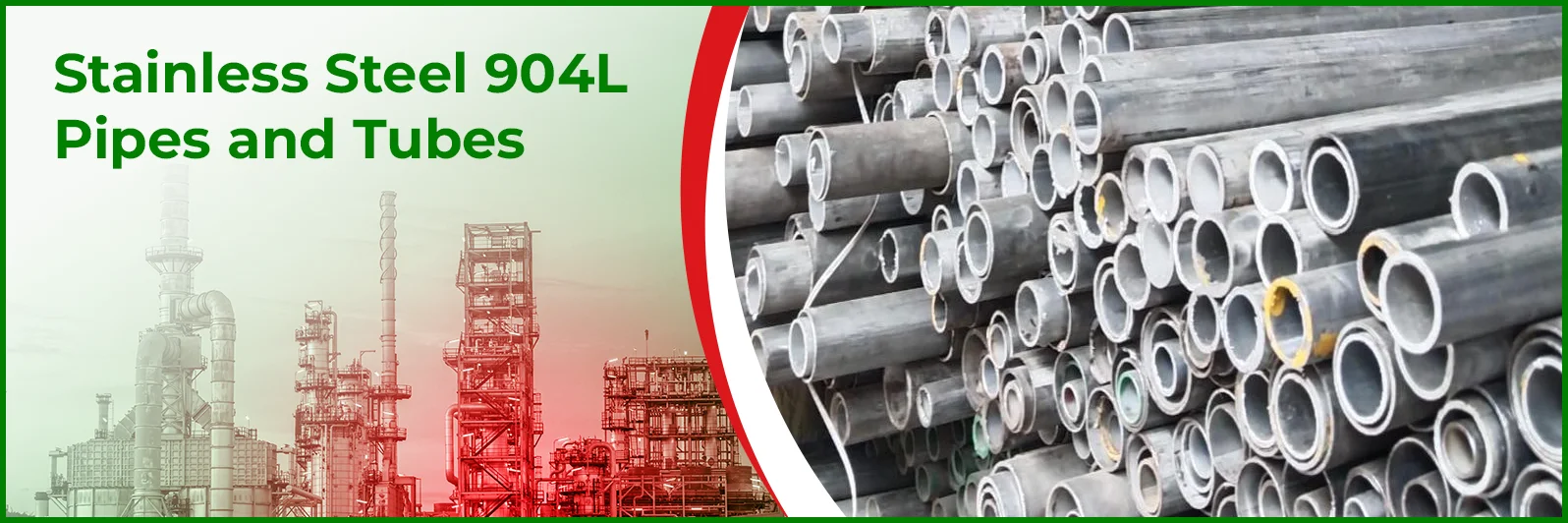
The copper present in 904L stainless steel is for sulphuric acid usage and not for chlorides hence this steel is used in pickling and acid-handling industries. Copper is effective in slowing the attack of reducing acids the same way molybdenum prevents pitting in chlorides. The composition of stainless steel grade 904L contains copper combined with approximately 25% nickel and 4-5% molybdenum. The result handles dilute sulphuric acid, phosphoric acid and severe chloride conditions in fertilizer and process plants across Oman. Other grades are on the stainless steel pipes and tubes hub.
Where 904L Pipes and Tubes Are Used
- Sulphuric and phosphoric acid handling and dilution lines
- Pickling lines and acid storage systems
- Fertilizer plant process lines in acid service
- Flue gas desulphurisation and scrubber piping
- Seawater and brine systems where 316L pits
For chloride resistance at a lower cost, duplex and super duplex are often considered; for the most severe chloride service, 254 SMO goes further.
Why 904L Behaves Differently from 316L
Element | 316L | 904L | What it does |
|---|---|---|---|
Nickel | 10.0 to 14.0% | 23.0 to 28.0% | Stabilises the austenitic structure and resists chloride stress corrosion cracking |
Molybdenum | 2.00 to 3.00% | 4.0 to 5.0% | Improves pitting and crevice resistance |
Copper | Not specified | 1.00 to 2.00% | Improves resistance in reducing acids, notably sulphuric acid |
Carbon | 0.035% max | 0.020% max | Very low carbon for welded service |
Using PREN = %Cr + 3.3 × %Mo + 16 × %N on representative mid-range compositions gives about 25 for 316L and about 35 for 904L. That is a large step, but it still leaves 904L short of the super austenitic and super duplex grades for hot seawater. The acid performance, not the PREN number, is usually what justifies the price.
904L in Acid, Chloride and Sour Service
904L was developed for reducing acids, particularly dilute sulphuric acid, and it also performs far better than 316L in chloride-bearing service. It is not a universal solution: hot concentrated acids, high-temperature seawater and strongly oxidising conditions each have their own limits, and the alloy supplier's corrosion data should be checked against the actual conditions. Under NACE MR0175 / ISO 15156-3, high-alloy austenitic grades have their own acceptance limits. State your service conditions in the RFQ; requirements are confirmed at quotation.
What Affects the Price of 904L
- Alloy surcharges, which move with nickel, molybdenum and chromium markets
- Seamless or welded
- Size, schedule or wall, and length
- Surface finish and any polishing
- Nickel, molybdenum and copper content, which make 904L several times the price of 304L
- Testing, including corrosion testing and PMI
- Quantity and stock availability versus a mill order
- Certification (EN 10204 3.1 or 3.2) and third-party inspection
- Incoterm and destination port
Quotations are available in USD, OMR, AED, SAR, QAR, KWD and BHD, on EXW, FOB, CFR or CIF terms.
What to send for a quotation:
grade, standard, seamless or welded, NPS or OD, schedule or wall, length, quantity, finish, testing, certification, inspection, destination port and required date.
904L Certificates and Inspection
904L is supplied with EN 10204 3.1 certificates as standard, and EN 10204 3.2 certificates on request. Inspection by the buyer's nominated third-party agency can be arranged; state your requirement in the RFQ. Check the chemistry, the heat treatment condition, tensile results and any corrosion test report. PMI on receipt confirms the grade. See the MTC and EN 10204 certification guide.
Packing and Site Storage
Lead time is confirmed at quotation. Material ships with end caps and, where specified, protective wrapping. Keep it away from carbon steel racks, slings and grinding dust, since embedded iron rusts on the surface and can start pitting. On coastal Gulf sites, rinse salt deposits off before fabrication.
Fittings and Related Grades
Match with ASTM A403 WP904L fittings and ASTM A182 F904L flanges, and use matching or higher-alloy filler metal.
- stainless steel fittings and flanges hub
- 254 SMO pipes and tubes
- Duplex and super duplex pipes and tubes
904L is used across fertilizer, refinery and petrochemical and desalination and water treatment plants.
SS 904L FAQ
What is 904L stainless steel?
A high-alloy austenitic grade with about 25% nickel, 4 to 5% molybdenum and 1 to 2% copper, developed for sulphuric acid and severe chloride service.
Why does 904L contain copper?
Copper improves resistance in reducing acids, particularly sulphuric acid, which is the grade's original purpose.
Is 904L suitable for seawater?
It performs far better than 316L, but hot seawater usually calls for super austenitic or super duplex grades. Check the conditions against corrosion data.
Does 904L need a low-carbon version?
No. Its carbon is already limited to 0.020%, so it behaves as an L grade.
What is the EN equivalent of 904L?
1.4539 (X1NiCrMoCu25-20-5).
What should I send for a quotation?
Send the grade, standard, form, size, wall, length, quantity, finish, testing, certification, inspection and destination port.
Request a Quote for Stainless Steel 904L Pipes and Tubes
Send the grade, standard, size and quantity, with the process conditions or corrosion assessment attached. Every enquiry is checked before the offer is prepared, so 904L is confirmed as the right grade for the acid or chloride conditions involved.