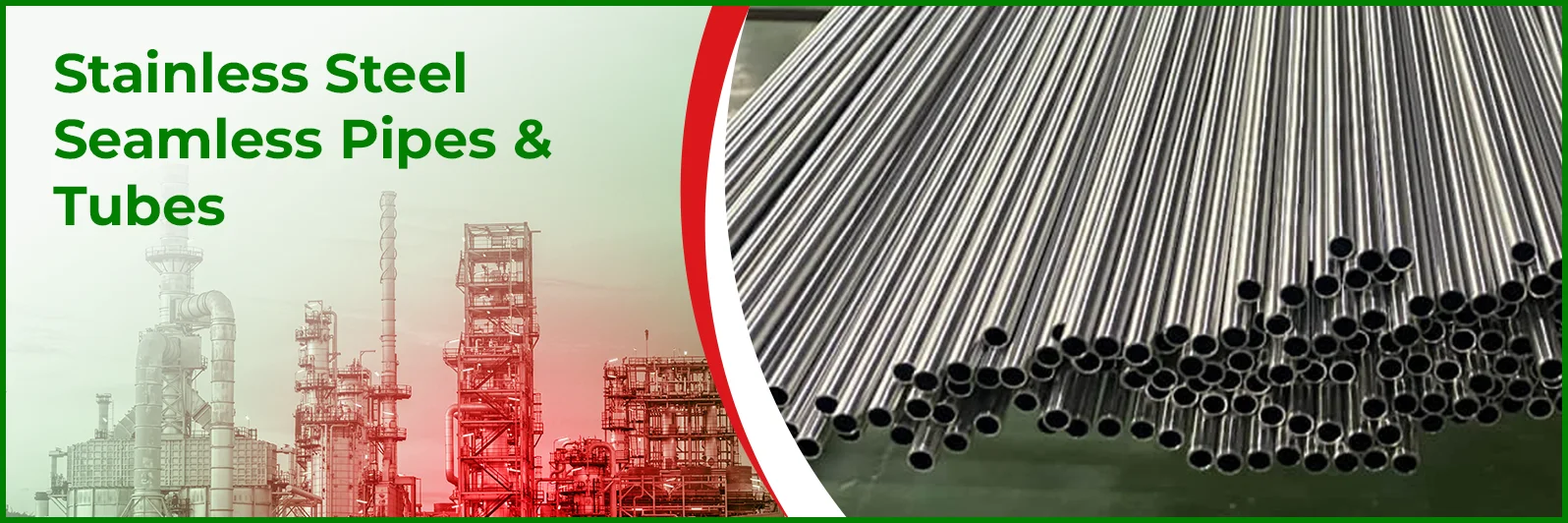
The letter that follows indicates the presence of carbon in the steel and thus allows for some further flexibility. The letter L keeps carbon content low so that welds do not get sensitised, while letter H keeps it high enough for steel to be able to keep its creep strength. The letter does not get written down correctly for years to come. Our series of stainless steel seamless pipes and tubes includes austenitic, ferritic and high-alloy grades according to ASTM A312 and A213 standards, such as 304L, 316L and 904L. They serve process and utility systems across Oman. Welded options are on the stainless steel pipes and tubes hub.
L, H and Plain Grades: What Changes
|
Variant |
Carbon |
Strength |
Where it is used |
|---|---|---|---|
|
L grade (304L, 316L) |
Low |
Slightly lower yield and tensile |
Welded process piping, where sensitisation must be avoided |
|
Plain grade (304, 316) |
Standard |
Higher than L |
General service, often supplied dual certified with the L grade |
|
H grade (304H, 316H) |
Higher, controlled range |
Better creep strength at high temperature |
Service above the creep range, where codes allow higher stresses |
Sensitisation is the practical reason for L grades. When an austenitic steel with normal carbon is held in a certain temperature range during welding, chromium carbides form at the grain boundaries and leave the metal beside the weld short of chromium, which then corrodes preferentially. Low carbon slows that reaction; stabilised grades such as 321 and 347 tie the carbon up instead.
Sour Service and Corrosion Limits
Austenitic stainless steels fall under NACE MR0175 / ISO 15156-3, with limits on H2S partial pressure, chloride content, temperature and pH by alloy group. 316L is acceptable only in mild sour conditions, and higher-alloy grades cover more. In hot chloride service, chloride stress corrosion cracking is usually the limiting mechanism rather than pitting. State your service conditions in the RFQ; requirements are confirmed at quotation.
Price Factors
- Grade, since nickel and molybdenum dominate the cost
- Size, schedule and length
- Surface finish and any polishing or electropolishing
- Testing, including A262 and PMI
- Quantity and stock availability versus a mill order
- Certification (EN 10204 3.1 or 3.2) and third-party inspection
- Incoterm and destination port
Quotations are available in USD, OMR, AED, SAR, QAR, KWD and BHD, on EXW, FOB, CFR or CIF terms.
What to send for a quotation:
grade and variant (L, H or dual certified), standard, NPS or OD, schedule or wall, length, quantity, finish, testing, certification, inspection, destination port and required date.
Certificates and Inspection
Seamless stainless pipe and tube are supplied with EN 10204 3.1 certificates as standard, and EN 10204 3.2 certificates on request. Inspection by the buyer's nominated third-party agency can be arranged; state your requirement in the RFQ. Certificates should show full chemistry including carbon, solution annealing details, tensile results and any corrosion test results. See the MTC and EN 10204 certification guide.
Storage and Contamination Control
Lead time is confirmed at quotation. Stainless ships capped and, where specified, wrapped. Keep it off carbon steel racks, use dedicated slings, grinding discs and brushes, and store it away from carbon steel fabrication, because embedded iron rusts and can start pitting. On coastal Gulf sites, rinse salt deposits off before welding or installation.
Fittings, Flanges and Related Products
- Stainless steel fittings and flanges hub
- Stainless steel welded pipes and tubes
- Stainless steel instrumentation tubing
- Duplex and super duplex pipes and tubes for higher chloride resistance
Seamless stainless is used across refinery and petrochemical, fertilizer and desalination and water treatment plants.
Seamless Stainless FAQ
What is the difference between 304, 304L and 304H?
Carbon content. 304L is low carbon for welded service, 304H has higher carbon for creep strength at high temperature, and 304 sits between them.
What does dual certified mean?
A single heat that meets both the L grade chemistry and the plain grade strength requirements, so the certificate lists both, for example 304/304L.
What is sensitisation?
The formation of chromium carbides at grain boundaries during welding, which leaves the adjacent metal low in chromium and prone to corrosion. L and stabilised grades reduce the risk.
Which standard covers stainless pipe, A312 or A213?
A312 covers pipe ordered by NPS and schedule. A213 covers boiler, superheater and heat exchanger tubes ordered by OD and wall.
What finish is standard?
Pickled and passivated. Bright annealed, polished and electropolished finishes are available on request.
What should I send for a quotation?
Send the grade and variant, standard, size, wall, length, quantity, finish, testing, certification, inspection, destination port and required date.
Request a Quote for Seamless Stainless Pipes and Tubes
Send the grade, standard, size, wall and quantity, with the piping specification attached. Every enquiry is checked against ASTM A312 or A213 before the offer is prepared, so the L, H or dual certified requirement is confirmed before material is selected.