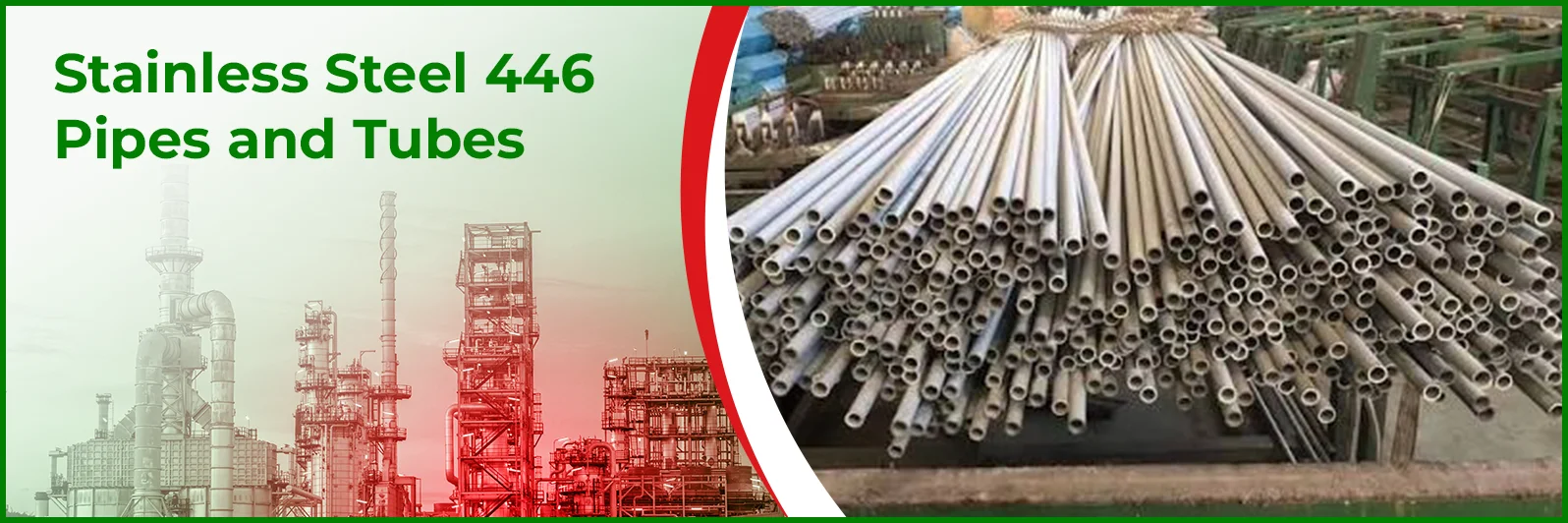
Nickel is a problematic component in sulphiding conditions because it produces low-melting sulphides which erode the alloy at its grain boundaries, so nickel alloys that are successful in hot air doing dry cleaning can fail normally in sulphur-containing flue gasses. 446 alloy escapes this by containing 23% to 27% of chromium and having almost negligible nickel content. Oxidation resistance comes from the chromium instead. Stainless steel 446 pipes and tubes are specified for furnace parts, radiant tubes and incinerator internals in sulphur-laden service at plants across Oman. Other grades are on the stainless steel pipes and tubes hub.
Where 446 Is Used
- Furnace parts, burner components, and radiant tubes in sulphur-bearing atmospheres
- Incinerator and kiln internals
- Flue and hot gas ducting where sulphur is present
- Thermowells and protection tubes in fired equipment
- Applications where nickel-bearing grades suffer sulphidation attack
For clean high-temperature air, 310/310S has better strength; for moderate temperatures, 430 is more economical.
Strengths and Limits of a 25% Chromium Ferritic Grade
Property | 446 |
|---|---|
Oxidation resistance | Very high, thanks to 25% chromium |
Sulphidation resistance | Better than nickel-bearing austenitic grades, since there is little nickel to form sulphides |
High-temperature strength | Modest; ferritic grades creep at lower stresses than austenitic ones |
Room-temperature toughness after service | Reduced by 475 °C embrittlement and sigma phase after long exposure |
Weldability | Limited; welds coarsen and lose ductility, so design should minimise welding |
The embrittlement point matters in practice. A 446 component that has run for a long period can be brittle when cold, so handle it carefully during outages and avoid shock loading. Design details that allow replacement rather than repair usually serve better than welded repairs in the field.
446 Corrosion and Service Limits
446 resists oxidation and sulphidation in hot gas, but it is not a wet-corrosion grade: in chloride solutions and acids its performance is limited, and it has no molybdenum. Long exposure in the embrittling temperature ranges reduces room-temperature toughness. It is not a sour service material. State your service conditions in the RFQ; requirements are confirmed at quotation.
What Affects the Price of 446
- Alloy surcharges, which move with nickel, molybdenum and chromium markets
- Seamless or welded
- Size, schedule or wall, and length
- Surface finish and any polishing
- Testing, including corrosion testing and PMI
- Quantity and stock availability versus a mill order
- Certification (EN 10204 3.1 or 3.2) and third-party inspection
- Incoterm and destination port
Quotations are available in USD, OMR, AED, SAR, QAR, KWD and BHD, on EXW, FOB, CFR or CIF terms.
What to send for a quotation:
grade, standard, seamless or welded, NPS or OD, schedule or wall, length, quantity, finish, testing, certification, inspection, destination port and required date.
446 Certificates and Inspection
446 is supplied with EN 10204 3.1 certificates as standard, and EN 10204 3.2 certificates on request. Inspection by the buyer's nominated third-party agency can be arranged; state your requirement in the RFQ. Check the chemistry, the heat treatment condition, tensile results and any corrosion test report. PMI on receipt confirms the grade. See the MTC and EN 10204 certification guide.
Packing and Site Storage
Lead time is confirmed at quotation. Material ships with end caps and, where specified, protective wrapping. Keep it away from carbon steel racks, slings and grinding dust, since embedded iron rusts on the surface and can start pitting. On coastal Gulf sites, rinse salt deposits off before fabrication.
Fittings and Related Grades
- stainless steel fittings and flanges hub
- Stainless steel 310/310S pipes and tubes
- 253MA pipes and tubes
446 is used in fired equipment across refinery and petrochemical and power generation plants.
SS 446 FAQ
What is 446 stainless steel?
A high-chromium ferritic stainless steel with 23 to 27% chromium, used for oxidation and sulphidation resistance in hot gas.
Why is 446 better than 310S in sulphur-bearing atmospheres?
Because it has little nickel. Nickel forms low-melting sulphides that attack nickel-rich alloys in sulphidising conditions.
What are the limits of 446?
Modest high-temperature strength, limited weldability, and loss of room-temperature toughness after long service through embrittlement.
Is 446 suitable for wet chloride service?
No. It has no molybdenum and is intended for hot gas rather than aqueous corrosion.
What is the nearest EN grade?
1.4762 (X10CrAlSi25), though it contains aluminium and is not identical.
What should I send for a quotation?
Send the grade, form, OD and wall, length, quantity, operating temperature and atmosphere, certification, inspection and destination port.
Request a Quote for Stainless Steel 446 Pipes and Tubes
Send the OD, wall and quantity, with the operating temperature and gas composition. Every enquiry is checked before the offer is prepared, so the grade is matched to the atmosphere rather than the temperature alone.