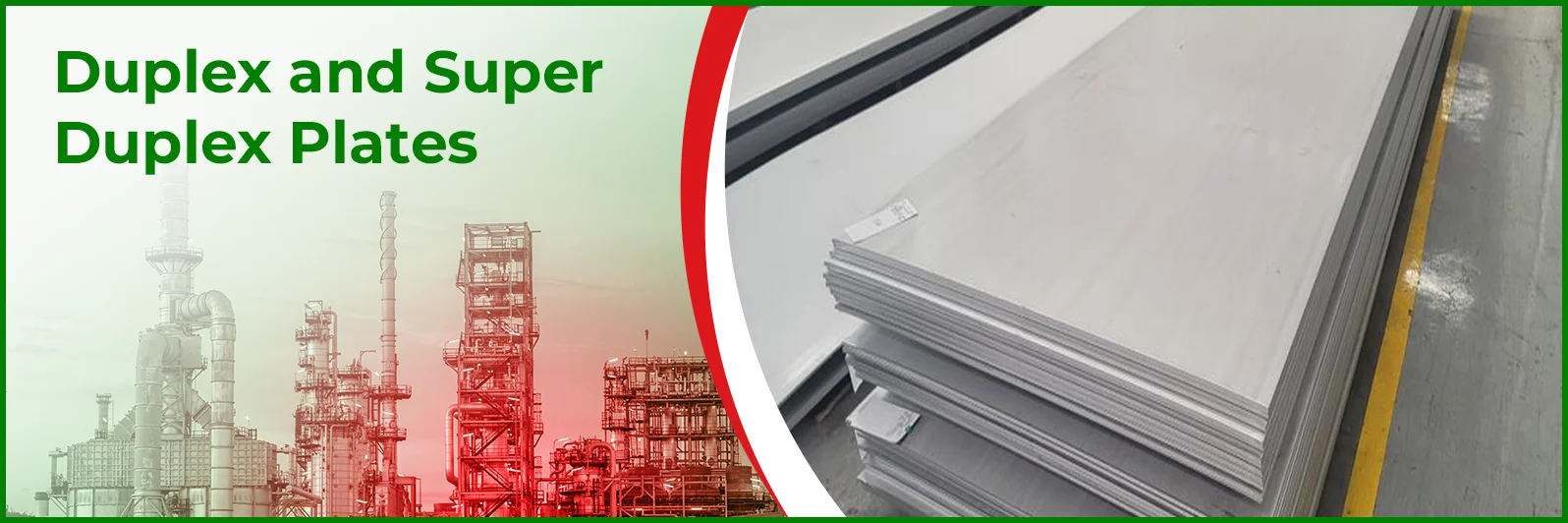
Specify 2205 instead of 316L and the vessel gets thinner, because minimum yield goes from 170 MPa to 450 MPa. The same figure decides whether the fabricator can actually make it. Rolling a shell or pressing a dished end takes force in proportion to yield strength, springback is greater, and a shop set up for austenitic work may find a duplex plate at the edge of its capacity. Duplex and super duplex plates go into seawater, chloride and offshore equipment across Oman and the GCC. The range is on the plates and sheets hub.
Forming Duplex Plate
|
Property |
316L |
2205 |
Super duplex |
Consequence in the shop |
|---|---|---|---|---|
|
Minimum yield strength |
170 MPa |
450 MPa |
550 MPa |
Forming force rises roughly in proportion |
|
Springback |
Low |
Higher |
Higher still |
Overbend allowances have to be reworked, not carried over from austenitic practice |
|
Work hardening |
High |
Moderate |
Moderate |
Duplex hardens less during forming, which helps |
|
Minimum elongation |
40 percent |
25 percent |
15 to 25 percent |
Less ductility in reserve, so bend radii are larger |
Four practical points:
- Confirm press capacity before the plate is ordered, especially on heavy sections and dished ends.
- Use larger bend radii than austenitic practice. Lower elongation means less margin.
- Cold forming leaves residual stress and raises hardness. Heavily cold formed duplex components may need re-solution annealing, and in sour service the cold worked condition is assessed differently from the annealed one.
- Hot forming has a window. Work it too hot and ferrite grows at the expense of austenite; too cool and intermetallic phases form. Hot formed components normally need re-solution annealing with a rapid water quench afterwards.
Sour Service
NACE MR0175 / ISO 15156 Part 3 sets environmental limits for duplex stainless steels covering hydrogen sulphide partial pressure, chloride content and temperature, with a hardness limit applied, and the limits differ between standard duplex and super duplex. Cold worked material is assessed separately from annealed material, which matters on formed plate components where the forming has raised the hardness. Send the full service envelope and the forming details with the enquiry.
Duplex and Super Duplex Plates: Price Factors
Each enquiry is priced on its own, because grade, class and testing scope move the figure more than quantity does. What counts:
- Grade and the alloying elements it carries
- Size, pressure class, facing and bore
- Schedule or wall the item is made to
- Production route, forged or formed from pipe or plate
- Supplementary testing and inspection scope
- Order quantity and availability
- Certificate level and witness requirements
- Delivery terms and port of discharge
Quotations are available in USD, OMR, AED, SAR, QAR, KWD and BHD, on EXW, FOB, CFR or CIF terms.
What to send for a quotation:
item type, material grade and standard, size, pressure class, facing, schedule or wall, quantity, testing, certification, inspection, destination port and required date.
Certification, Traceability and PMI
Material comes with EN 10204 3.1 certificates as standard, and EN 10204 3.2 certificates on request. Inspection by the buyer's nominated third-party agency can be arranged; state your requirement in the RFQ. Check that the heat number on the certificate matches the marking on the item itself, and that the heat treatment condition is stated, the ferrite content and the solution annealing temperature and quench. Positive material identification confirms the grade before anything is welded in. See the MTC and EN 10204 certification guide.
Delivery and Handling
Lead time is confirmed at quotation. Fittings ship bundled or crated with bevel protection; flanges ship with face and ring groove protection, since a scored face leaks whatever the gasket. In coastal Oman, salt deposits build up on anything left in the open, so a rinse and a dry before fitting up is worth the time.
Related Plate Products
- Stainless steel plates and sheets
- 254 SMO plates and sheets
- Duplex fittings and flanges
- Duplex and super duplex pipes and tubes
- Plates and sheets
Duplex and Super Duplex Plates FAQ
Does duplex plate form like austenitic plate?
No. Forming force rises roughly with yield strength, so 2205 at 450 MPa takes far more than 316L at 170 MPa, springback is greater and bend radii have to be larger because elongation is lower.
What is the difference between S31803 and S32205?
Nitrogen mainly. S31803 permits as little as 0.08 percent while S32205 sets a floor of 0.14 percent and tightens chromium and molybdenum, giving better austenite re-formation after welding.
Does hot formed duplex need re-annealing?
Normally yes. Hot forming disturbs the phase balance, so components are re-solution annealed with a rapid water quench to restore it.
Why is ferrite content measured?
Because rolling, forming and welding can move the ferrite and austenite balance outside the required range without any change in chemistry, costing toughness or corrosion resistance.
Where should test coupons be taken on heavy plate?
From material representing the thickest section. A coupon from a thin offcut does not reflect the cooling rate the middle of a thick plate experienced.
What should I send for a quotation?
Send the UNS number, thickness, width and length or cut size, ferrite and G48 testing requirements, forming details, quantity, certification and destination port.
Request a Quote for Duplex and Super Duplex Plates
Send the UNS number rather than just 2205, with the thickness, size and testing scope. Where the plate will be rolled or pressed, say so, because the forming case and the corrosion case have to be settled on the same order.