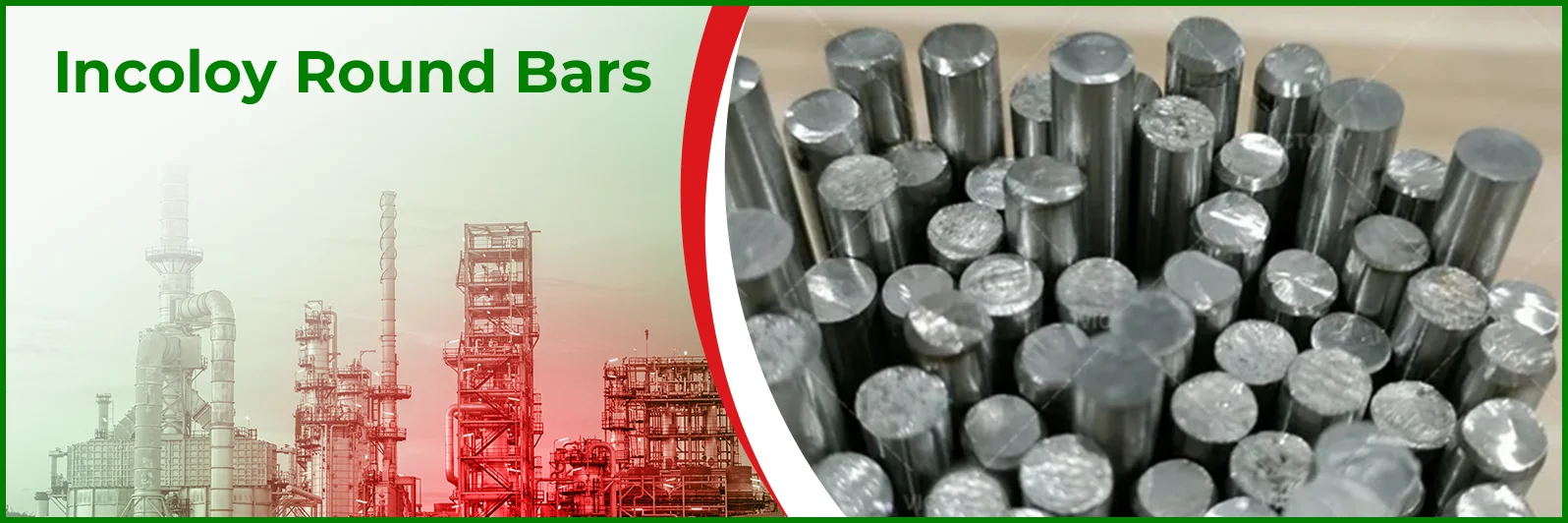
Buyers in the Gulf ask for Inconel by habit, and a good share of those enquiries describe a duty an Incoloy grade covers. The difference is iron. Incoloy alloys use iron as the balance rather than nickel, which lowers the alloy cost substantially while still carrying furnace temperatures or sulphuric acid, depending on the grade, and the saving on a machined component is real. Incoloy round bars go into high temperature and acid service components across Oman and the GCC. The range is on the round bars hub.
When Incoloy Answers the Question
|
Duty |
Incoloy option |
Where Inconel is still needed |
|---|---|---|
|
Furnace and heater components at high temperature |
800H or 800HT |
Where the temperature or the atmosphere exceeds what they cover |
|
Carburising atmospheres |
800H |
Severe carburisation at the top of the range |
|
Sulphuric and phosphoric acid |
825 |
Where chloride levels or oxidising conditions defeat it |
|
Sour production components |
825 |
Where the environmental limits put 625 or 718 in instead |
|
Chloride stress corrosion resistance |
800 and 825, both well above stainless |
Severe chloride service at temperature |
|
High strength components |
None of the Incoloy grades |
718, which is age hardenable and far stronger |
The place Incoloy cannot substitute is strength. None of these grades age hardens, so a wellhead or downhole component sized on strength needs Alloy 718 and no amount of cost argument changes that.
Where strength is not the driver and the duty is temperature or acid, sending the service conditions rather than an alloy name usually produces a better answer than the enquiry asked for.
Machining and Heat Treatment
These alloys work harden under the tool like the Inconel grades, so the same rules apply: positive feed throughout, sharp tooling, lower speeds, rigid set-ups and generous coolant. The coarse grain structure of 800H and 800HT gives a poorer surface finish than fine grained material at the same settings, which is worth allowing for where finish matters.
Lubricants and marking must be low in sulphur and low in chloride, because sulphur embrittles these alloys at temperature and bar stock usually sees heat at some point in its life.
The heat treatment condition belongs on the certificate. For 800H and 800HT the solution annealing treatment and the resulting grain size are what the grade is bought for, and a certificate that records neither has not demonstrated compliance.
Where Incoloy Bar Is Used
- Furnace components, fixtures and retort parts in heat treatment work
- Heater and furnace internals in refinery and petrochemical service
- Fertilizer plant acid service components
- Sour production valve and wellhead parts in Alloy 825
- Heat exchanger components and tube sheets
Matching products: nickel alloy plates, nickel alloy pipes and tubes and nickel alloy fittings and flanges.
Sour Service and PMI
Under NACE MR0175 / ISO 15156 Part 3, nickel alloys acceptable for sour service are listed with environmental limits on hydrogen sulphide partial pressure, chloride content, temperature and elemental sulphur, and with hardness limits by alloy and condition. Alloy 825 appears in that listing and is widely used on sour production components; the solution annealed and cold worked conditions are treated differently, which matters on drawn or cold finished bar.
Positive material identification belongs in the order. Incoloy and Inconel bars look identical in a rack, and the price difference between them is exactly the incentive for a mix-up to go unnoticed.
What Moves the Price of Incoloy Round Bars
- Material grade and alloy content, which carry market surcharges
- Type, size, pressure class and facing
- Matching pipe schedule or fitting wall
- Forged or wrought, and seamless or welded construction
- Testing: hardness, impact testing, NDT, PMI and ferrite checks where they apply
- Quantity against mill or forge minimums
- Certification level (EN 10204 3.1 or 3.2) and third-party inspection
- Incoterm and destination port
Quotations are available in USD, OMR, AED, SAR, QAR, KWD and BHD, on EXW, FOB, CFR or CIF terms.
What to send for a quotation:
item type, material grade and standard, size, pressure class, facing, schedule or wall, quantity, testing, certification, inspection, destination port and required date.
Incoloy Round Bars: Certificates and Inspection
Supplied with EN 10204 3.1 certificates as standard, and EN 10204 3.2 certificates on request. Inspection by the buyer's nominated third-party agency can be arranged; state your requirement in the RFQ. The certificate should carry the material standard and grade, heat number, heat treatment condition and mechanical results, and for the H and HT grades the carbon content and grain size. PMI on receipt is worth specifying wherever grades share a store or a fabrication shop, since a stencil is only paint. See the MTC and EN 10204 certification guide.
Packing, Delivery and Gulf Site Storage
Lead time is confirmed at quotation. Items are packed in crates or bundles, with bevels and machined faces protected. On Gulf laydown yards the two things that cause rework are a damaged sealing face and surface contamination, so keep face protectors on until assembly and store alloy items clear of carbon steel racking, slings and grinding dust.
Related Products
Incoloy Round Bars FAQ
What is the difference between Incoloy and Inconel?
Incoloy alloys use iron as the balance while Inconel alloys are nickel based. That lowers the alloy cost substantially, and for many temperature and acid duties an Incoloy grade covers the requirement.
When can Incoloy not substitute for Inconel?
On strength. None of these grades age hardens, so a component sized on strength needs Alloy 718 regardless of the cost argument.
What is the difference between 800 and 800H?
800H carries a specified carbon range and a grain size requirement that plain 800 does not, and those deliver the creep performance. Plain 800 does not substitute, and the certificate should record both.
Why does 800H show lower room temperature strength than 800?
The coarse grain size that gives 800H its creep resistance at temperature reduces cold strength. The grade is bought for its hot behaviour, so the room temperature figures are not the point.
Which Incoloy grade suits sulphuric acid?
Alloy 825, with its copper and molybdenum additions, which give acid resistance approaching the nickel based grades at a lower alloy cost.
What should I send for a quotation?
Send the alloy, diameter, condition, tolerance, length, quantity, service conditions, grain size requirements where they apply, certification and destination port.
Request a Quote for Incoloy Round Bars
Send the service conditions alongside the alloy, because an enquiry naming Inconel is sometimes better answered with an Incoloy grade. Where plain 800 has been specified for a creep duty, the H and HT requirements are raised before sourcing.