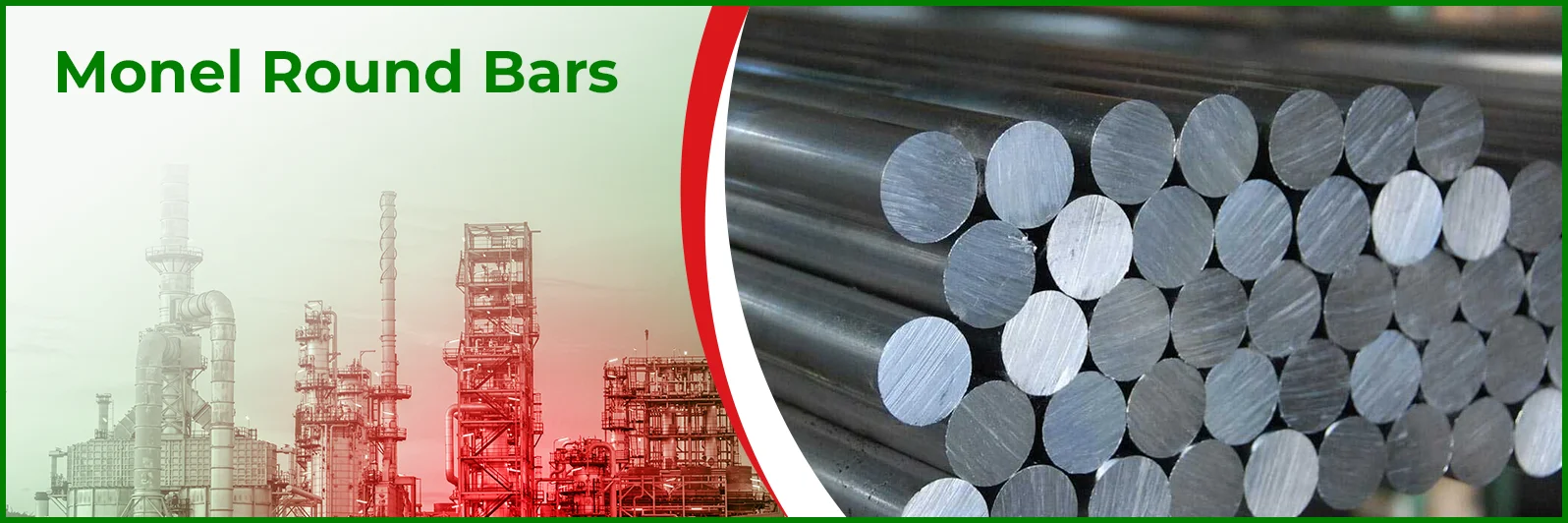
Monel 400 is a soft alloy, so when a seawater application needs a shaft or a fastener the usual answer is K-500, the age hardenable version with aluminium and titanium added. Ageing raises its strength several times over, and it raises hardness with it. At the harder end K-500 becomes susceptible to cracking in seawater under load, which is why subsea fastener specifications cap its hardness rather than asking for the strongest condition available. Monel round bars serve marine and acid service across Oman and the GCC. The range is on the round bars hub.
Alloy 400 and Alloy K-500
|
Item |
Monel 400, N04400 |
Monel K-500, N05500 |
|---|---|---|
|
Strengthening |
None, used in the annealed or worked condition |
Age hardened by aluminium and titanium additions |
|
Tensile strength, minimum annealed |
480 MPa |
Higher before ageing, far higher after |
|
Typical use as bar |
Machined parts, valve components, pump parts |
Shafts, pump and propeller shafts, fasteners, studs |
|
Hardness after ageing |
Low |
Substantially higher, and the figure that governs qualification |
|
Seawater cracking susceptibility |
Low |
Rises with hardness, which is why specifications cap it |
The design tension is direct. The reason to choose K-500 is strength, and strength arrives with hardness, and hardness is what the environment punishes. Specifications for subsea and marine fasteners handle it by limiting hardness and by controlling the ageing cycle rather than maximising strength, so a bar ordered as "K-500, highest strength available" is asking for the wrong thing.
What to put on the order: the ageing cycle, the required mechanical properties, and the maximum hardness. All three, because the first produces the second and third and they can conflict.
Machining and Handling
Monel work hardens under the tool, so the standard nickel alloy rules apply: positive feed throughout, sharp tooling, lower speeds with maintained feed, rigid set-ups and generous coolant. K-500 in the aged condition is harder work again, so the same machine-soft-then-age question arises as on Alloy 718.
Lubricants, marking and tape must be low in sulphur and low in chloride. On K-500 this matters more than on most, because the ageing cycle heats the part and anything left on the surface goes into that cycle with it. Degrease before heat treatment as a process step.
Monel is noble relative to carbon steel and most stainless, so in a galvanic couple the other metal corrodes. A Monel fastener in a carbon steel structure protects itself at the structure's expense, which is usually the wrong way round on a bolted connection.
Where Monel Bar Is Used
- Pump and propeller shafts in marine and offshore service
- Fasteners and studs for seawater and splash zone duty
- Valve stems and trim in hydrofluoric acid alkylation units
- Machined components in desalination and water treatment brine service
- Chain, cable fittings and marine hardware
Matching products: Monel plates and sheets, Monel 400 pipes and tubes and Monel flanges.
Sour Service
Under NACE MR0175 / ISO 15156 Part 3, nickel alloys acceptable for sour service are listed with environmental limits on hydrogen sulphide partial pressure, chloride content, temperature and elemental sulphur, and with hardness limits that depend on the alloy and its condition. On an age hardened alloy such as K-500 the hardness limit is the binding constraint, because the cycle that gives the strength raises the hardness.
Sulphides are also what drive Monel pitting in stagnant seawater, so a component that is both sour and marine has two mechanisms acting on it rather than one. Send the full service envelope, the intended component and the required mechanical properties together, so the ageing cycle can be set against all three.
Monel Round Bars: Price Factors
Each enquiry is priced on its own, because grade, class and testing scope move the figure more than quantity does. What counts:
- Grade and the alloying elements it carries
- Size, pressure class, facing and bore
- Schedule or wall the item is made to
- Production route, forged or formed from pipe or plate
- Supplementary testing and inspection scope
- Order quantity and availability
- Certificate level and witness requirements
- Delivery terms and port of discharge
Quotations are available in USD, OMR, AED, SAR, QAR, KWD and BHD, on EXW, FOB, CFR or CIF terms.
What to send for a quotation:
item type, material grade and standard, size, pressure class, facing, schedule or wall, quantity, testing, certification, inspection, destination port and required date.
Certification, Traceability and PMI
Material comes with EN 10204 3.1 certificates as standard, and EN 10204 3.2 certificates on request. Inspection by the buyer's nominated third-party agency can be arranged; state your requirement in the RFQ. Check that the heat number on the certificate matches the marking on the item itself, and that the heat treatment condition is stated, and for K-500 the ageing cycle and the resulting hardness. Positive material identification confirms the grade before anything is welded in. See the MTC and EN 10204 certification guide.
Delivery and Handling
Lead time is confirmed at quotation. Fittings ship bundled or crated with bevel protection; flanges ship with face and ring groove protection, since a scored face leaks whatever the gasket. In coastal Oman, salt deposits build up on anything left in the open, so a rinse and a dry before fitting up is worth the time.
Related Products
Monel Round Bars FAQ
What is the difference between Monel 400 and K-500?
K-500 adds aluminium and titanium so it can be age hardened. The base nickel copper chemistry is the same, so it keeps Monel 400's corrosion behaviour while gaining substantial strength.
Why do specifications cap the hardness of K-500?
Because ageing raises strength and hardness together, and at the harder end K-500 becomes susceptible to cracking in seawater under load. Subsea fastener specifications limit hardness rather than maximising strength.
What should be stated on a K-500 order?
The ageing cycle, the required mechanical properties and the maximum hardness. The cycle produces the other two and they can conflict, so all three belong on the order.
Why are fasteners a harder case than plate in seawater?
A fastener is a crevice by definition. The thread root and the bearing face under the head are both low flow regions, and low flow is where Monel is vulnerable.
Will a Monel fastener protect a carbon steel structure?
The reverse. Monel is noble relative to carbon steel, so the structure corrodes to protect the fastener, which is usually the wrong way round on a bolted connection.
What should I send for a quotation?
Send the alloy, diameter, condition and ageing cycle, required properties, maximum hardness, length, quantity, service conditions, certification and destination port.
Request a Quote for Monel Round Bars
Send the alloy, diameter and condition with the required properties and the maximum hardness. Where an order asks for the strongest K-500 condition available on a seawater component, that is queried before the bar is aged.