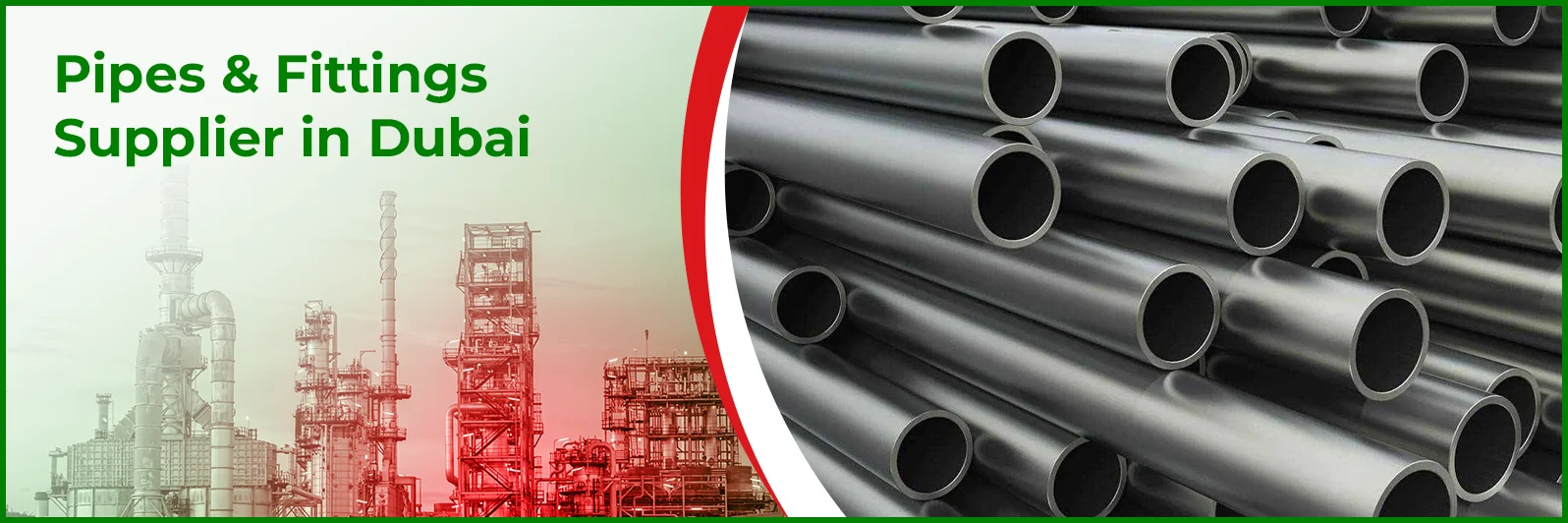
Dubai's industrial material demand is unlike Abu Dhabi's. There is relatively little heavy process plant and a great deal of trade: Jebel Ali and its free zone move material onward across the region, so a large share of what is bought there is bought to be sold again or fabricated and shipped out. For a pipes and fittings supplier in Dubai the recurring difficulty is not choosing a grade. It is keeping the mill certificate chain intact and matched to the material through every transfer. Ranges supplied sit under pipes and tubes, pipe fittings and flanges and plates and sheets.
Why Traceability Is the Dubai Problem
Material that changes hands more than once accumulates documentation risk. The metal is unchanged; what degrades is the link between the metal and the paper that describes it:
|
Failure |
How it happens |
What prevents it |
|---|---|---|
|
Certificate does not match the heat on the item |
Mixed stock, part loads, repacking between sales |
Heat number recorded against every item on dispatch |
|
Certificate is a copy of a copy with no traceable origin |
Material passed through several traders |
Mill certificate obtained at purchase, not reconstructed later |
|
Marking lost |
Cut lengths sold from a longer piece without transfer marking |
Transfer of identification recorded at the cut |
|
Grade assumed from appearance |
Lookalike grades in the same rack |
Positive material identification, and segregation |
|
Quantity certified does not match quantity shipped |
Partial sales against one certificate |
Split certification handled properly at the point of sale |
Lookalike pairs are the practical hazard in a stockholding environment:304 and 316 cannot be told apart by eye, A106 Gr B and A333 Gr 6 cannot be separated by positive material identification, and Grade 91 and Grade 92 cannot be separated by standard portable equipment at all, because the difference is tungsten. Details of the certification chain are on the MTC and EN 10204 guide.
Certification, Inspection and Packing
Material is supplied with EN 10204 3.1 certificates as standard and EN 10204 3.2 certificates on request. Third-party inspection by the buyer's nominated agency can be arranged, and the requirement should be stated in the enquiry rather than raised after the order, because it changes the release sequence at the mill. Where a project runs to an operator or EPC material specification, send that document with the enquiry.
Packing is specified for sea freight and for storage in Gulf conditions: end caps and bevel protection on pipe, face protection on flanges, and separation of stainless, duplex and nickel alloy items from carbon steel handling equipment so iron contamination does not reach a finished surface. Where material will sit on site before installation, say so at enquiry, because outdoor storage in coastal humidity needs a different preservation specification from material going straight into a fabrication shop.
What Affects Delivered Cost to Dubai
- Grade and alloy content, which carry market surcharges independent of freight
- Size, wall or thickness, and quantity against mill minimums
- Which port the material lands at, and the inland leg from there
- Testing scope: impact, hardness, HIC, corrosion testing, NDT and PMI
- Certification level and third-party inspection
- Incoterm, and whether customs clearance sits with the buyer or the supplier
Quotations are available in USD, OMR, AED, SAR, QAR, KWD and BHD, on EXW, FOB, CFR or CIF terms. Lead time is confirmed at quotation.
What to send for a quotation:
the line list or material take-off, with grade and standard, size, wall or schedule, pressure class and facing where it applies, quantity, service conditions, testing, certification, inspection, delivery point and required date.
Related Locations and Pages
- Pipe and tube supplier in the UAE
- Pipe supplier in Abu Dhabi
- MTC and EN 10204 certification guide
- Desalination and water treatment industry
- Infrastructure and fabrication industry
Dubai Supply: Buyer Questions
Why is Dubai described as a distribution market?
There is relatively little heavy process plant and a great deal of trade through Jebel Ali and its free zone, so much of what is bought there is resold or fabricated and shipped onward.
What is the main documentation risk in a trading chain?
The link between the metal and its certificate. Repacking, part sales and cut lengths break the connection between heat numbers, marking and the mill certificate.
Which lookalike grades cause the most trouble in stock?
304 and 316 cannot be separated by eye, A106 Gr B and A333 Gr 6 cannot be separated by positive material identification, and Grade 91 and Grade 92 cannot be separated by standard portable equipment because the difference is tungsten.
Does free zone delivery change the paperwork?
Yes. Free zone and mainland are different customs destinations, and material that enters and leaves a free zone carries that history in its documentation.
What is most often mis-specified for Dubai light industry?
Food and pharmaceutical requirements, where the governing requirement is surface finish and cleanability rather than pressure rating, so the finish has to be stated as well as the grade.
Request a Quote for Dubai Delivery
Say whether the material stays in the UAE, clears into the mainland or is re-exported, and whether certification has to satisfy an end operator rather than a trader. Those answers set the documentation, which is where trading orders fail rather than on the steel.