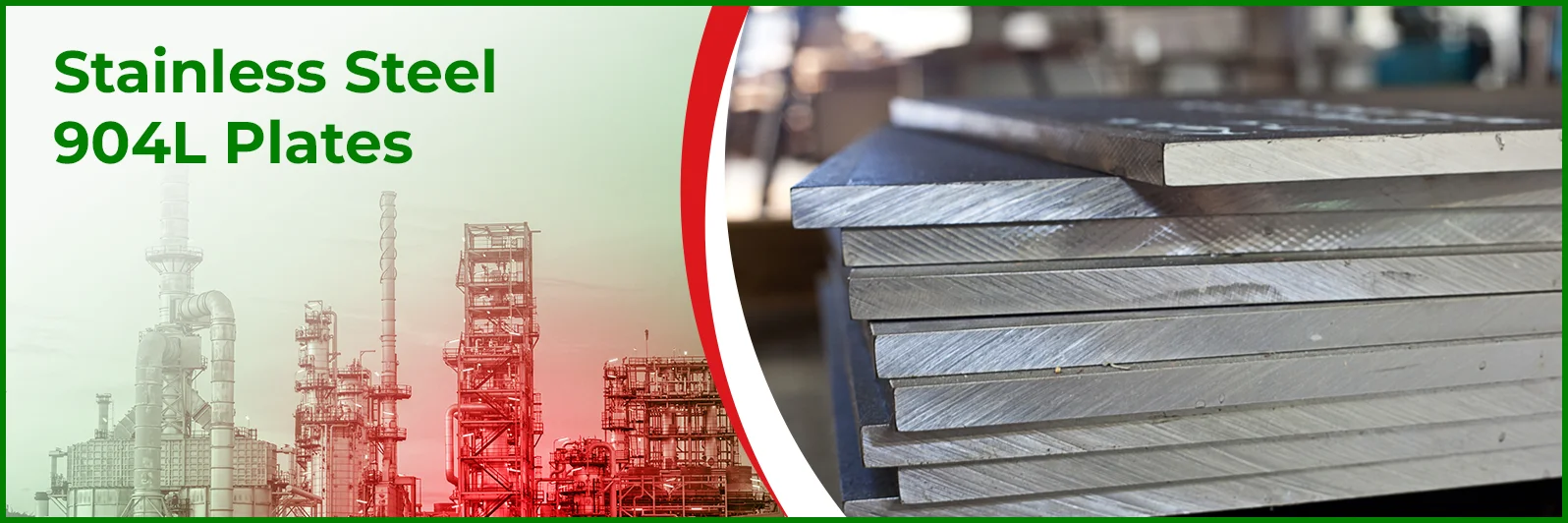
904L is bought as plate far more often than as pipe, because its home is vessels, tanks and linings in acid service, and that means the material arrives flat and leaves welded. The weld is where the trouble starts. Molybdenum segregates during solidification, so weld metal made with matching 904L filler ends up leaner in the dendrite cores than the plate either side of it, and corrodes first. Stainless steel 904L plates go into acid handling equipment across Oman and the GCC. The range is on the plates and sheets hub.
Chemical Composition
|
Element |
904L, UNS N08904 % |
|---|---|
|
Carbon |
0.020 max |
|
Chromium |
19.0 to 23.0 |
|
Nickel |
23.0 to 28.0 |
|
Molybdenum |
4.0 to 5.0 |
|
Copper |
1.0 to 2.0 |
|
Manganese |
2.00 max |
|
Silicon |
1.00 max |
|
Phosphorus |
0.045 max |
|
Sulphur |
0.035 max |
Read the copper line. It is there for sulphuric acid specifically, not for chlorides, and it is what separates 904L from a plain high molybdenum austenitic. The very low carbon maximum of 0.020 percent is a welding provision: with that little carbon there is almost nothing available to form chromium carbides in the heat affected zone, which matters on a grade that will be welded extensively.
The high nickel content is also why 904L plate pricing moves with nickel surcharges more sharply than 304 or 316 does.
Why the Weld Needs Overmatching Filler
In a high alloy austenitic weld pool, molybdenum does not distribute evenly as the metal freezes. Interdendritic regions finish richer and the dendrite cores finish leaner, so the weld metal's worst area is poorer than the nominal composition suggests. The plate has been solution annealed, which evens everything out; the weld has not.
The standard answer is to weld with a filler that carries more molybdenum than the parent, so that even the lean regions match or exceed the plate. Nickel base consumables of the Alloy 625 type are commonly specified for that reason.
Other fabrication rules that follow:
- Low heat input and controlled interpass temperature, to limit time in the ranges where intermetallic phases form
- Full back purging on root runs, since an oxidised root has markedly lower corrosion resistance
- Heat tint removed after welding, by pickling or mechanical means, because the discoloured band is depleted in chromium
- No carbon steel contamination, from tools, brushes or grinding discs
State whether fabrication is in your scope at enquiry, because the consumable is as much part of the specification as the plate.
Where 904L Plate Is Used in the GCC
- Sulphuric acid plant vessels, coolers and storage
- Fertilizer plant phosphoric acid equipment
- Refinery and petrochemical acid handling and scrubber internals
- Pickling lines and chemical process tanks
- Desalination and water treatment equipment on the more aggressive streams
Testing and Sour Service
Corrosion testing is commonly ordered on this grade. ASTM A262 practices cover intergranular attack resistance, and where the service is chloride bearing a pitting test may be specified. State the test and the acceptance criteria in the RFQ.
Under NACE MR0175 / ISO 15156 Part 3, highly alloyed austenitic stainless steels are acceptable for sour service within environmental limits on hydrogen sulphide partial pressure, chloride content and temperature, in the solution annealed condition and within a hardness limit. Cold worked material is treated differently, which is relevant on formed plate components. Send the service conditions with the enquiry.
Stainless Steel 904L Plates: Price Factors
Each enquiry is priced on its own, because grade, class and testing scope move the figure more than quantity does. What counts:
- Grade and the alloying elements it carries
- Size, pressure class, facing and bore
- Schedule or wall the item is made to
- Production route, forged or formed from pipe or plate
- Supplementary testing and inspection scope
- Order quantity and availability
- Certificate level and witness requirements
- Delivery terms and port of discharge
Quotations are available in USD, OMR, AED, SAR, QAR, KWD and BHD, on EXW, FOB, CFR or CIF terms.
What to send for a quotation:
item type, material grade and standard, size, pressure class, facing, schedule or wall, quantity, testing, certification, inspection, destination port and required date.
Certification, Traceability and PMI
Material comes with EN 10204 3.1 certificates as standard, and EN 10204 3.2 certificates on request. Inspection by the buyer's nominated third-party agency can be arranged; state your requirement in the RFQ. Check that the heat number on the certificate matches the marking on the item itself, and that the heat treatment condition is stated, and the filler metal used where fabrication is in scope. Positive material identification confirms the grade before anything is welded in. See the MTC and EN 10204 certification guide.
Delivery and Handling
Lead time is confirmed at quotation. Fittings ship bundled or crated with bevel protection; flanges ship with face and ring groove protection, since a scored face leaks whatever the gasket. In coastal Oman, salt deposits build up on anything left in the open, so a rinse and a dry before fitting up is worth the time.
Related Plate Products
- Stainless steel plates and sheets
- 254 SMO plates and sheets
- Duplex and super duplex plates
- Nickel alloy plates
- Plates and sheets
Stainless Steel 904L Plates FAQ
Why does 904L need overmatching filler?
Molybdenum segregates as the weld freezes, leaving dendrite cores leaner than the plate. A filler carrying more molybdenum, commonly a nickel base Alloy 625 type, keeps the weakest part of the weld at or above the parent.
What is the copper in 904L for?
Sulphuric acid resistance specifically. It is what separates 904L from a plain high molybdenum austenitic grade, and it does little for chlorides.
Why is the carbon limited to 0.020 percent?
To leave almost nothing available to form chromium carbides in the heat affected zone, which matters on a grade that will be welded extensively in fabrication.
Is 904L easier or harder to form than 316?
Easier in one respect: it work hardens less than 304 and 316, which makes it more forgiving in deep drawing and heavy forming despite the alloy content.
Does 904L resist seawater?
Better than 316 but below 254 SMO, which carries more molybdenum and nitrogen. For hot or chlorinated seawater the higher alloy is the usual choice.
What should I send for a quotation?
Send the thickness, width and length or cut size, finish, quantity, corrosion testing requirements, whether fabrication is in scope, certification and destination port.
Request a Quote for Stainless Steel 904L Plates
Send the thickness and size with the service, and say whether fabrication and welding are in your scope. Where matching filler has been assumed on an acid duty, the consumable question is raised with the offer rather than after commissioning.