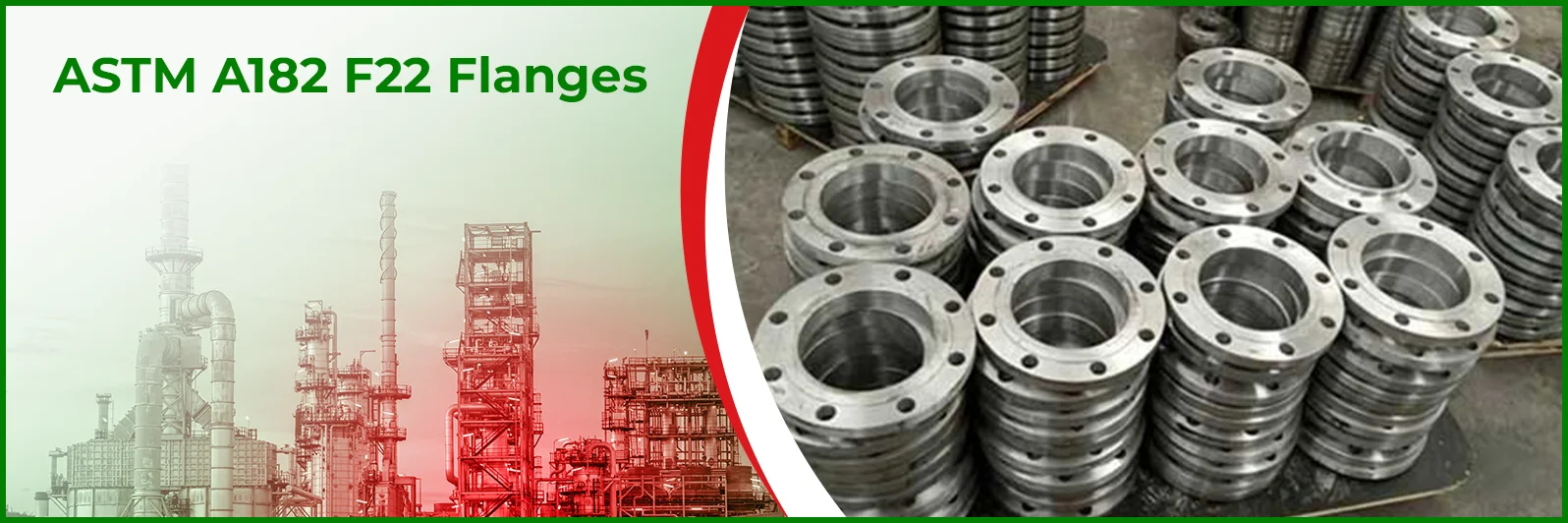
A flange made of 2.25Cr-1Mo that has been in the reactor for fifteen years is as strong as the day the flange was installed, but has lost a significant amount of toughness. Long exposure of phosphorus and tin at high temperatures means that it will move to the grain boundaries and will raise the temperature at which the metal switches from ductile to brittle, even by a hundred degrees or more in some situations; thus, the critical point is pressurising a cold reactor. ASTM A182 F22 flanges go onto hydroprocessing and high temperature piping in refineries across Oman and the GCC. The chemistry limit is where that is managed. The wider range is on the alloy steel fittings and flanges hub.
Temper Embrittlement, and How It Is Controlled
Long exposure in the range of roughly 340 to 575 degrees C lets phosphorus, tin, antimony and arsenic segregate to prior austenite grain boundaries. Strength and creep performance at operating temperature are unaffected. What changes is cold toughness, and a thick forging is where it matters most, because thick sections are the hardest to make tough in the first place.
The consequence is operational. Units are specified with a minimum pressurising temperature, so the metal is warmed before pressure is applied on start-up, and that limit tightens over the life of the plant as embrittlement accumulates.
Procurement controls it at the chemistry stage:
| Control | What it is |
|---|---|
|
J-factor |
Silicon plus manganese, multiplied by phosphorus plus tin, multiplied by ten thousand, with a maximum stated on the order |
|
X-bar |
A weld metal index based on phosphorus, antimony, tin and arsenic, expressed in parts per million |
|
Step cooling test |
A laboratory cycle simulating long service exposure, followed by impact testing to demonstrate the shift is within limits |
|
Supplementary impact testing |
Charpy results before and after step cooling, at the specified temperature |
None of these is supplied by default. They are supplementary requirements, and if the RFQ does not name them with their limits, standard F22 is what arrives.
PWHT, Bolting and Inspection
Post-weld heat treatment follows the thickest section in the joint, and a weld neck flange hub in this service is usually it. Cumulative PWHT exposure counts, so repair welds add cycles and a total limit belongs in the welding procedure.
Bolting has to suit the temperature: ASTM A193 B16 studs with matching nuts are common on hot hydroprocessing joints, since B7 loses relaxation resistance at the upper end. Where the unit has a minimum pressurising temperature, the bolted joints are part of what that limit protects.
For sour service under NACE MR0175 / ISO 15156 Part 2 the 22 HRC hardness limit applies alongside an accepted heat treatment condition, and the weld and heat affected zone must meet it as well as the parent forging.
Where F22 Flanges Are Used
- Hydrotreating and hydrocracking units in refinery and petrochemical service
- Catalytic reformer and hydrogen plant piping
- High temperature steam headers in power generation plants
- Crude and vacuum heater transfer lines
Matching buttweld fittings are ASTM A234 WP22 and matching pipe is ASTM A335 P22. The step below is ASTM A182 F11.
ASTM A182 F22 Flanges: Price Factors
Each enquiry is priced on its own, because grade, class and testing scope move the figure more than quantity does. What counts:
- Grade and the alloying elements it carries
- Size, pressure class, facing and bore
- Schedule or wall the item is made to
- Production route, forged or formed from pipe or plate
- Supplementary testing and inspection scope
- Order quantity and availability
- Certificate level and witness requirements
- Delivery terms and port of discharge
Quotations are available in USD, OMR, AED, SAR, QAR, KWD and BHD, on EXW, FOB, CFR or CIF terms.
What to send for a quotation: item type, material grade and standard, size, pressure class, facing, schedule or wall, quantity, testing, certification, inspection, destination port and required date.
Certification, Traceability and PMI
Material comes with EN 10204 3.1 certificates as standard, and EN 10204 3.2 certificates on request. Inspection by the buyer's nominated third-party agency can be arranged; state your requirement in the RFQ. Check that the heat number on the certificate matches the marking on the item itself, and that the heat treatment condition is stated, the class, and the J-factor where temper embrittlement limits are ordered. Positive material identification confirms the grade before anything is welded in. See the MTC and EN 10204 certification guide.
Delivery and Handling
Lead time is confirmed at quotation. Fittings ship bundled or crated with bevel protection; flanges ship with face and ring groove protection, since a scored face leaks whatever the gasket. In coastal Oman, salt deposits build up on anything left in the open, so a rinse and a dry before fitting up is worth the time.
Related Alloy Steel Products
- ASTM A182 F11 flanges
- ASTM A234 WP22 buttweld fittings
- Alloy steel fittings and flanges
- ASTM A335 P22 pipes
- RTJ flanges
ASTM A182 F22 Flanges: Buyer Questions
Why does temper embrittlement show up at shutdown rather than in service?
It raises the ductile-to-brittle transition temperature without affecting strength or creep performance at operating temperature, so the risk appears when the unit is cold and being pressurised.
What is the J-factor?
Silicon plus manganese, multiplied by phosphorus plus tin, multiplied by ten thousand, with a maximum stated on the order. It constrains four elements at once rather than phosphorus alone.
Is step cooling testing supplied as standard?
No. Step cooling and the J-factor and X-bar limits are supplementary requirements, so they have to be named in the RFQ with their limits or standard F22 is what arrives.
Which classes does F22 come in?
Class 1 at 415 MPa minimum tensile with 205 MPa yield, and Class 3 at 515 MPa with 310 MPa yield. Class 3 is the commonly supplied flange class.
Why is F22 used for hydrogen service?
API RP 941 Nelson curves give 2.25Cr-1Mo a usefully wider operating envelope against high temperature hydrogen attack than the lower alloy grades.
What should I send for a quotation?
Send the pattern, material class, NPS, pressure class, facing, bore schedule, quantity, J-factor and step cooling requirements, testing, certification, inspection and destination port.
Request a Quote for ASTM A182 F22 Flanges
Send the pattern, material class, size, pressure class, facing and bore schedule with the design temperature and hydrogen partial pressure. J-factor limits and step cooling are confirmed on the offer, since neither is supplied unless it is ordered.