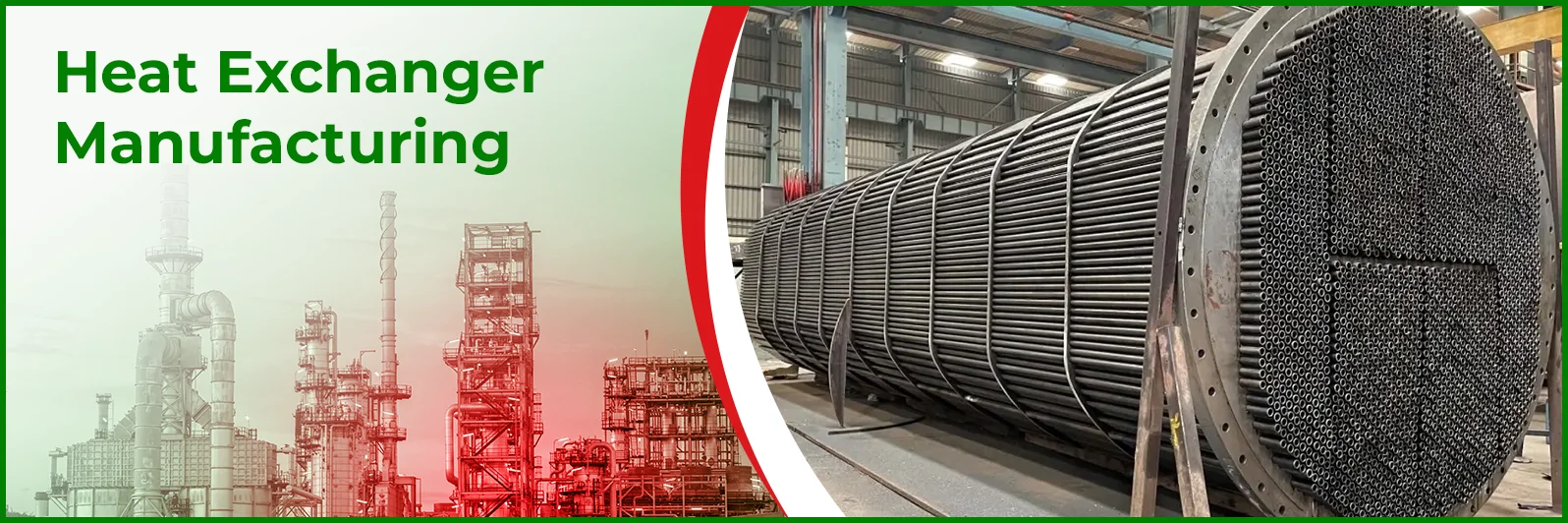
There are many joints as well as connections in a shell and tube exchanger that must all be sealed effectively. The tube can be made to fit into the hole in the tube sheet through expansion (for the tube to match properly) under a certain condition. This expansion technique is feasible only if the tube gets deformed before the tube sheet does. Order tube at the hard end of its range against a soft tubesheet and the joint will not set; order it too soft and it thins at the expansion. Heat exchanger tubes are bought on hardness and consistency as much as on grade. Projects across Oman and the GCC. The range sits under pipes and tubes.
What the Expanded Joint Needs
|
Requirement |
Why |
What to specify |
|---|---|---|
|
Tube softer than the tubesheet |
The tube must yield into the hole while the hole holds its shape |
Hardness range on the tube, and the tubesheet material stated |
|
Consistent wall thickness |
A thin spot thins further during expansion |
Wall tolerance, and the production route |
|
Consistent outside diameter and roundness |
The gap between tube and hole has to be even all round |
OD tolerance to the standard, tighter if specified |
|
Clean, scratch free surface |
Longitudinal scratches become leak paths through the joint |
Surface condition, and handling requirements |
|
Known condition |
Annealed material expands predictably, cold worked does not |
Delivery condition on the certificate |
This is why boiler and exchanger tube standards specify hardness where pipe standards do not.ASTM A179 and A192 are deliberately soft grades, and A210 Grade C carries a hardness ceiling precisely because it is stronger and still has to be expanded.
U Tubes and Bending
U tube bundles bring their own requirements, because bending thins the outside of the bend and work hardens it.
- Wall thinning at the bend is predictable and has to be allowed for, so the straight tube wall is chosen with the thinnest point in mind
- Work hardening at the bend can push hardness outside a sour service limit, so stress relief or solution annealing after bending is often specified
- The tightest radius sets the requirement. A bundle's innermost row is the limiting case
- Austenitic and duplex tubes may need re-solution annealing after tight bending, and on duplex the phase balance has to be restored
State the bend radii with the tube enquiry, because the bending requirement affects the tube specification rather than only the fabrication.
Materials, Certification and Inspection
Every item is supplied with EN 10204 3.1 certificates as standard, and EN 10204 3.2 certificates on request. Inspection by the buyer's nominated third-party agency can be arranged; state your requirement in the RFQ. Where a project runs to an operator or EPC material specification, send it with the enquiry so the offer is made against that document rather than against the governing ASTM or API standard alone. Positive material identification is worth specifying wherever alloy grades pass through the same yard. See the MTC and EN 10204 certification guide.
Lead time is confirmed at quotation. Material is packed for sea freight and for storage in Gulf conditions, with end caps, bevel and face protection, and separation of alloy items from carbon steel handling equipment.
What Affects the Price on Heat Exchanger Manufacturing Work
- Grade and alloy content, which carry market surcharges
- Size, wall or thickness, and quantity against mill minimums
- Seamless or welded, forged or plate fabricated
- Testing scope: impact, hardness, HIC, corrosion testing, NDT and PMI
- Certification level and third-party inspection
- Incoterm and destination port
Quotations are available in USD, OMR, AED, SAR, QAR, KWD and BHD, on EXW, FOB, CFR or CIF terms.
What to send for a quotation:
the line list or material take-off, with grade and standard, size, wall or schedule, pressure class and facing where it applies, quantity, service conditions, testing, certification, inspection, destination port and required date.
Related Industries and Products
- Boiler manufacturing industry
- Power generation industry
- Desalination and water treatment industry
- Copper nickel and titanium pipes and tubes
- ASTM A179 boiler tubes
Heat Exchanger Tube FAQ
Why does tube hardness matter on an exchanger?
The tube is expanded into the tubesheet hole and has to yield while the hole holds its shape. Too hard and the joint will not set; too soft and the tube thins at the expansion.
Why do boiler and exchanger tube standards specify hardness when pipe standards do not?
Because the tube is expanded rather than welded into place. A179 and A192 are deliberately soft, and A210 Grade C carries a hardness ceiling because it is stronger and still has to expand.
What changes when tubes are U bent?
The bend thins and work hardens the outside of the tube, so the straight wall is chosen with the thinnest point in mind, and stress relief or re-annealing is often needed after bending.
Is expansion a problem in sour service?
It can be. Expansion raises hardness locally through cold work, and NACE MR0175 caps hardness, so the expanded joint has to be assessed rather than assumed.
Why are seawater tubesheets often clad or made from the tube material?
Because the galvanic pair between tube and tubesheet matters. A titanium tube in a carbon steel tubesheet is an aggressive couple, so the tubesheet is matched or clad.
What should I send for a quotation?
Send the tube grade, OD, wall, length, quantity, straight or U bent with bend radii, hardness requirement, tubesheet material, testing scope, certification and destination port.
Request a Quote for Heat Exchanger Manufacturing Projects
Send the tube schedule with the OD, wall, length and bend radii, plus the tubesheet material and the hardness requirement. Where the hardness range and the expansion will not work together, that is raised before the tubes are drawn.