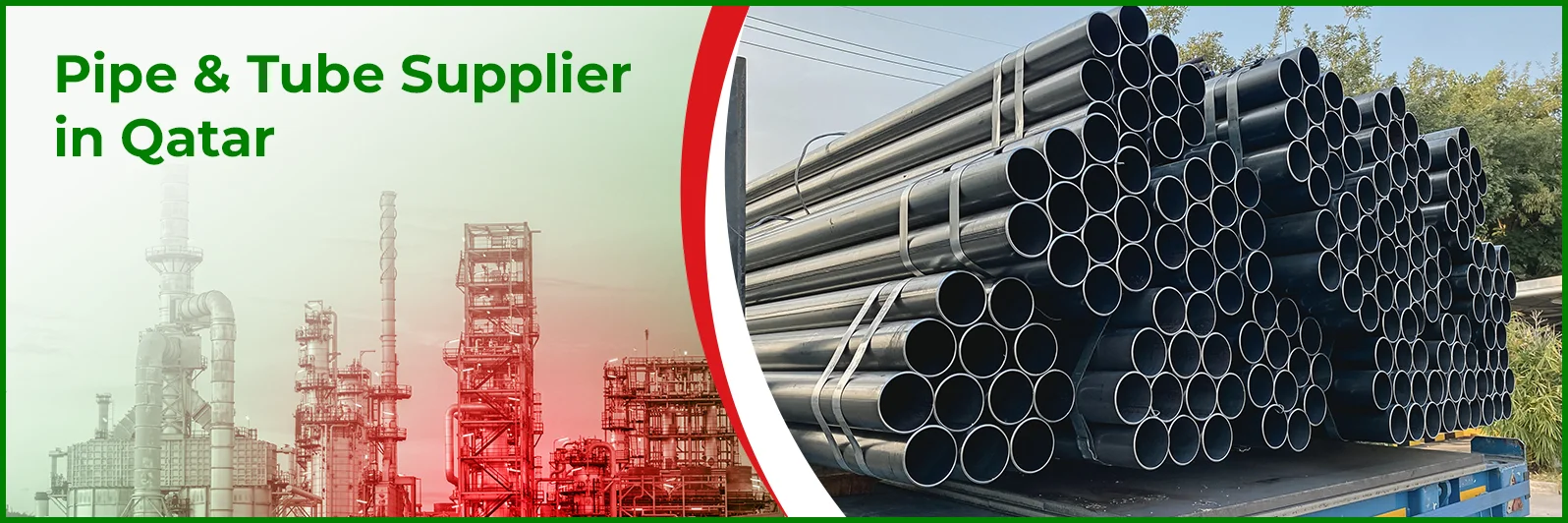
Most GCC markets have a spread of industries. Qatar is concentrated: gas production, processing and liquefaction dominate industrial demand, which means the material mix leans one way. For a pipe and tube supplier in Qatar the governing question on most enquiries is the minimum design temperature, and the answer to that reaches further down the bill of material than buyers expect, all the way to studs, nuts and gaskets that are usually bought as commodities. Ranges supplied sit under pipes and tubes, pipe fittings and flanges and plates and sheets.
Three Temperature Regimes on One Site
An LNG facility is not one cold system. It is three regimes that need different materials, and the boundaries between them are where mistakes happen:
|
Regime |
Approximate range |
Material family |
|---|---|---|
|
Ambient and warm process |
Above zero |
|
|
Moderately cold, including autorefrigeration and blowdown |
Down to around minus 46 degrees Celsius |
|
|
Deep cryogenic liquefaction and storage |
Down to around minus 162 degrees Celsius |
304L and 316L austenitic, 9% nickel steel plate where specified |
The boundary problem: a line that never runs cold in normal operation may chill sharply during depressurisation, and the design temperature is set by that excursion rather than by the operating condition. A line list that shows only operating temperature is not enough to select material.
Full detail is on the LNG and gas processing industry page.
Certification, Inspection and Packing
Material is supplied with EN 10204 3.1 certificates as standard and EN 10204 3.2 certificates on request. Third-party inspection by the buyer's nominated agency can be arranged, and the requirement should be stated in the enquiry rather than raised after the order, because it changes the release sequence at the mill. Where a project runs to an operator or EPC material specification, send that document with the enquiry.
Packing is specified for sea freight and for storage in Gulf conditions: end caps and bevel protection on pipe, face protection on flanges, and separation of stainless, duplex and nickel alloy items from carbon steel handling equipment so iron contamination does not reach a finished surface. Where material will sit on site before installation, say so at enquiry, because outdoor storage in coastal humidity needs a different preservation specification from material going straight into a fabrication shop.
What Affects Delivered Cost to Qatar
- Grade and alloy content, which carry market surcharges independent of freight
- Size, wall or thickness, and quantity against mill minimums
- Which port the material lands at, and the inland leg from there
- Testing scope: impact, hardness, HIC, corrosion testing, NDT and PMI
- Certification level and third-party inspection
- Incoterm, and whether customs clearance sits with the buyer or the supplier
Quotations are available in USD, OMR, AED, SAR, QAR, KWD and BHD, on EXW, FOB, CFR or CIF terms. Lead time is confirmed at quotation.
What to send for a quotation:
the line list or material take-off, with grade and standard, size, wall or schedule, pressure class and facing where it applies, quantity, service conditions, testing, certification, inspection, delivery point and required date.
Related Locations and Industries
- All locations
- LNG and gas processing industry
- Low temperature fittings and flanges
- Upstream oil and gas and sour service
- Fasteners and bolting
Qatar Supply: Buyer Questions
Why does Qatari demand skew to low temperature material?
Gas production, processing and liquefaction dominate industrial demand, so the minimum design temperature governs most enquiries rather than pressure or general corrosion.
Why is operating temperature not enough to select material?
A line that never runs cold in normal operation can chill sharply during depressurisation, and the design temperature is set by that excursion rather than by the operating condition.
What is the most commonly missed low temperature item?
Bolting. A193 B7 is not a low temperature grade, so cryogenic and cold service joints need A320 L7, L43 or L7M studs with A194 Grade 4 or 7 nuts.
What happens when a line is both sour and cold?
The two requirements stack and pull in opposite directions, because strength and hardness help the impact case and hurt the sour case. The grade usually ends up lower and the wall thicker.
What should a Qatari enquiry state?
Minimum design temperature, sour conditions if any, the impact test temperature and acceptance energy from the specification, and whether bolting and small bore sit inside the low temperature scope.
Request a Quote for Qatar Delivery
Send the minimum design temperature and say whether bolting, gaskets and small bore are inside the low temperature scope. Those two lines prevent the failure that recurs on cold service orders, which is a correct pipe specification bolted up with ordinary studs.