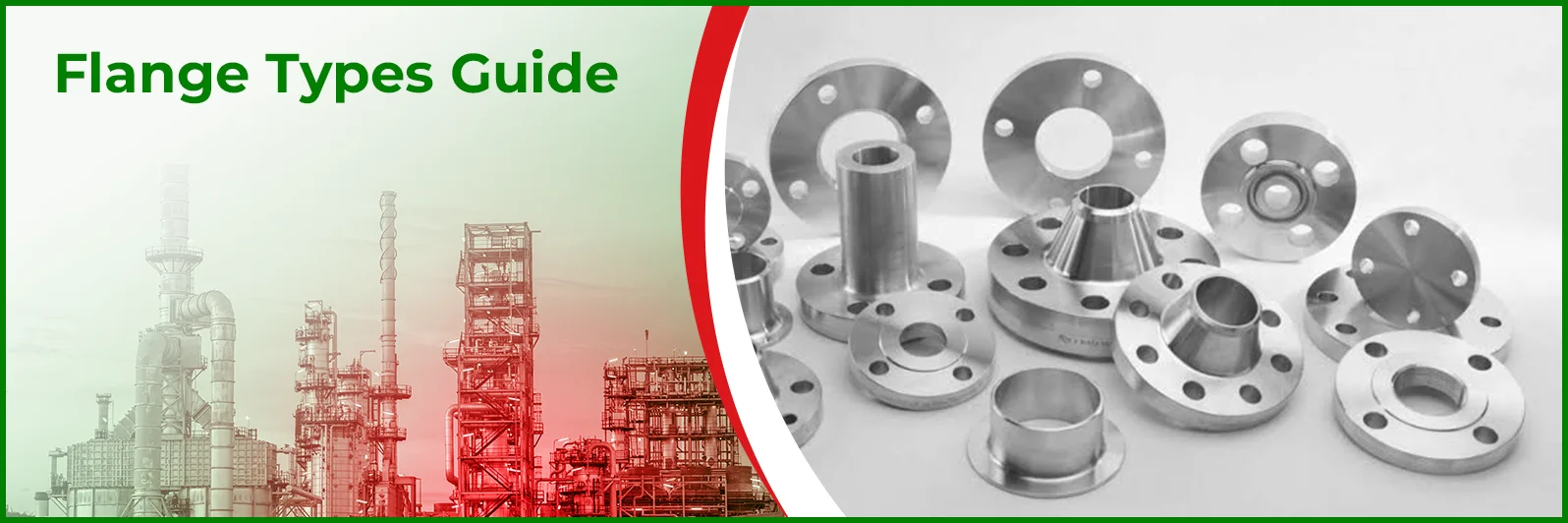
Flange class comes from pressure and temperature. Flange type does not. Type comes from what the joint is there to do: let a line be broken for maintenance, positively isolate it, hold an instrument, take an abrupt size change, or allow the pipe to rotate during assembly. Decide the job first and the type usually follows without argument, which is why this flange types guide is organised by function rather than by picture. Ranges are underpipe fittings and flanges.
The Standard Types by Job
|
Type |
The job it does |
What to watch |
|---|---|---|
|
Full strength permanent joint on pressure and cyclic service |
The bore is ordered to a schedule. A mismatch leaves a permanent step in the line |
|
|
Lower cost joint where alignment tolerance helps |
Two fillet welds, and the setback that makes the inner one possible |
|
|
Closes a line, and provides positive isolation |
This is what a permit to work names, because it is not a valve |
|
|
Joint without welding, small bore, often where welding is not permitted |
The thread carries both seal and load, which sets a floor on pipe wall |
|
|
Small bore joint that can be broken |
Exists so the line can be dismantled, not for pressure capability |
|
|
Rotating flange for alignment, and the flange never touches the process |
Carbon steel backing flange on an alloy line is the cost case |
Flange Types: Buyer Questions
Does pressure decide flange type?
No, pressure and temperature decide the class. Type follows what the joint has to do: be broken for maintenance, positively isolate, carry an instrument, or allow rotation during assembly.
Why does the weld neck bore matter?
It is ordered to a schedule, and if it does not match the pipe supplied the joint has a permanent internal step that disturbs flow and concentrates stress.
Are ASME B16.47 Series A and Series B interchangeable?
No. Series A is heavier with fewer larger bolts and Series B uses more smaller bolts on a thinner flange, and they do not mate, so the series must be stated.
When is a flat face used instead of a raised face?
Where the mating component is cast iron or another brittle material that a raised face would crack by loading it unevenly.
Can a flange face be too smooth?
Yes. The machined finish is specified as a range, because too rough prevents sealing and too smooth leaves the gasket nothing to grip.
What makes a blind flange different from a valve?
It provides positive isolation rather than closure, which is why a permit to work names the blind rather than the valve upstream of it.
Applying This to an Enquiry
State the type, class, facing, face finish and, on weld neck flanges, the bore schedule. The bore is the item most often left off, and it is the only one on that list that cannot be corrected after the joint is welded.
Quotations are available in USD, OMR, AED, SAR, QAR, KWD and BHD, on EXW, FOB, CFR or CIF terms, with EN 10204 3.1 certificates as standard and 3.2 on request. Lead time is confirmed at quotation.